
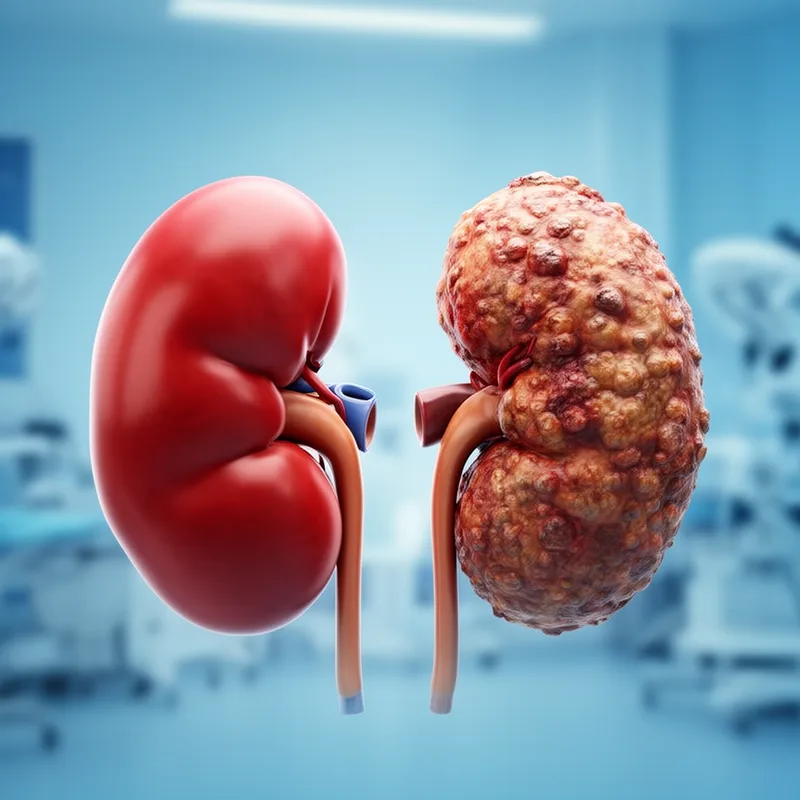
kidney disease
 11
2.8
11
2.8

- noun
- /ˈkɪdni dɪˈziːz/
- Marianne's past medical history includes asthma, hypertension, and stable chronic kidney disease stage 3a.
- chronic kidney disease
- management of kidney disease
- kidney disease patients
Loading YouTube…
Watch on YouTubeBut when you've lost enough kidney function, then you have kidney failure or chronic kidney disease or CKD.
- But when you've lost enough kidney function, then you have kidney failure or chronic kidney disease or CKD.
- Now I should add to that, if you are a smoker or you have kidney disease, that's two instances where methylcobalamin is certainly better.
- Unless you have severe in stage kidney disease, your body's very good at recycling proteins.
- And that's why diabetics get retinopathy, nephropathy, neuropathy, kidney disease, nerve, nerve, nerve damage, and eye disease.
- I mean, you know, their kidney disease is real, but there are levers you can pull in the brain that affect all of the all of these systems.
Examples
-
If kidney disease is left untreated, it can lead to serious health complications.
-
If you have kidney disease, have recently had a heart attack, developed heart failure, or have severe liver problems, metformin is not for you.
-
Her father became very sick with a kidney disease, and he died when she was in her early teens.
-
Two studies examined kidney disease, with both finding a positive association.
Academic text (2012) -
Hypertension, as such, is recognized as the second leading cause of kidney disease.
Academic text (2016) -
Approximately 20 million Americans are thought to have chronic kidney disease (CKD).
Academic text (2007) -
Diabetes is a leading cause of kidney disease, blindness, nontraumatic lower-limb amputations, and cardiac disease.
Academic text (2005) -
Her father suffered from kidney disease for many years before he passed away.
-
Many people do not realize that high blood pressure can lead to kidney disease over time.
Synonyms
 18
3.0
18
3.0
A condition when the kidneys stop working and cannot remove waste or keep water and salts in balance
 9
3.9
9
3.9
A serious condition where the kidneys stop removing waste and balancing body fluids
 1
5.5
1
5.5
A kidney disease that makes many small sacs of fluid and can cause kidney failure
 1
7.5
1
7.5
A swelling and soreness of the kidneys often caused by infection or immune problems
 1
6.3
1
6.3
A condition in which the kidneys cannot remove waste from the blood well
 1
5.3
1
5.3
A long-term disease in which many small bags filled with liquid grow in the kidneys and make them bigger


 1
5.3
1
5.3
A health problem that affects the kidneys
 1
8.1
1
8.1
A disease that damages the kidneys
 1
4.2
1
4.2
A sudden loss of the kidneys' ability to remove waste from the blood
 1
5.1
1
5.1
A sudden severe loss of kidney function caused by injury or infection
 1
4.1
1
4.1
A long-term condition in which the kidneys slowly stop working well
 1
9.9
1
9.9
Inflammation of the tiny kidney filters that causes blood and protein to appear in urine

Long-term loss of kidney function that makes waste build up in the body
A kidney disease that causes swelling and a lot of protein in the urine

Hardening of small blood vessels in the kidneys that reduces blood flow and can cause kidney failure
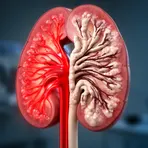
Hardening and thickening of small kidney blood vessels that reduces blood flow and harms the kidneys

A kidney that drops down from its normal place
How Serious

Surface Forms
Morphology
The meaning 'a medical condition affecting the kidneys' is directly and compositionally derived from 'kidney' (the organ) + 'disease' (a condition disrupting bodily functions). This noun–noun compound follows a common, cross-linguistic pattern, so a B1 learner who knows both constituents will readily infer the meaning.
Etymology
Kidney disease comes from the words kidney, the part of the body that cleans the blood, and disease, meaning 'illness'. It literally names an 'illness' of the kidneys, so it means the kidneys are damaged or not working properly.