

to keep step


 1
3.2
1
3.2
- phrasal verb
- /kip stɛp/
- He kept step and never conveyed any notion of his intentions.
Examples
-
Amsterdam starts toward the Old Brewery, Johnny keeping step. # AMSTERDAM #
Fiction book (2002) -
"We say that we will have to keep step with Iran."
Blog text (31) -
D'Artagnan keeps step with the cloaked figure, the retinue.
Fiction book (1993) -
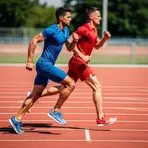
As they marched in formation, the soldiers had to keep step with the commanding officer's pace.
-
To stay in sync during the dance practice, everyone must keep step with the instructor's movements.
-
The children happily kept step with their teacher as they walked to the playground.
Synonyms
 29
3.5
29
3.5
Move at the same speed as someone or something
 1
3.9
1
3.9
Keep up with changes so you do not fall behind
Antonyms


How Synchronized

Surface Forms
Morphology
The meaning 'to move at the same pace as someone else' is directly built from 'keep' (to maintain) plus 'step' (a foot movement), so a learner who knows both words can reasonably infer maintaining the same stepping rhythm. This compositional pattern (maintain + pace/step) is cross-linguistically common and mirrors forms like 'keep pace', making the expression immediately comprehensible to a B1 learner.
Etymology
The verb keep step comes from marching, when people try to keep the same step as each other, like soldiers matching a drumbeat, so it now means 'to move at the same pace as someone else'.