
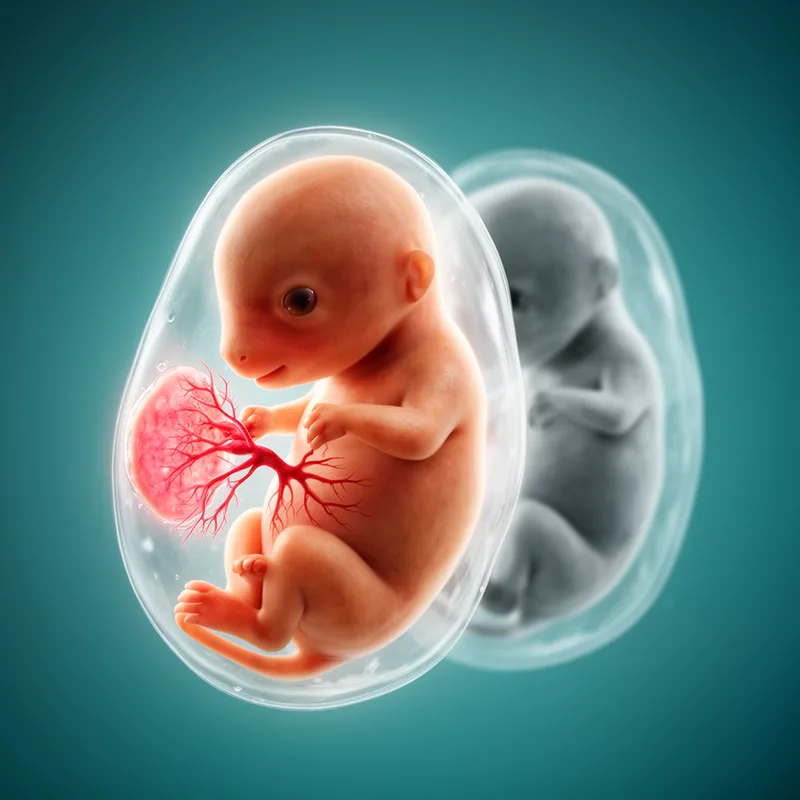
kainogenesis
- noun
- /ˌkeɪnəˈdʒɛnɪsɪs/
- Specialized
 :
cainogénesis
:
cainogénesis
- The evolution of the placenta in mammals is a classic example of kainogenesis.
Examples
-
The concept of kainogenesis challenges the idea that all embryonic features are purely ancestral.
-
Some embryologists debate the frequency of kainogenesis in vertebrate development.
-
The study of kainogenesis reveals how species adapt over time.
-
Researchers are investigating kainogenesis in amphibians.
-
The evolution of the giraffe's long neck is often cited as an example of kainogenesis during embryonic development.
-
The appearance of feathers in bird embryos illustrates the process of kainogenesis in evolutionary biology.
-
Scientists study kainogenesis to understand how new traits arise in different species over generations.
Synonyms
The embryo develops new body features that its ancestors did not have

The development of new body parts or traits in an embryo that ancestors do not have

New body parts that develop while an embryo grows but were not in its ancestors
Surface Forms
Morphology
Etymology
Kainogenesis comes from Greek parts kaino- meaning 'new' and -genesis meaning 'origin' or 'creation', like the familiar word genesis. So, kainogenesis refers to the formation in embryos of truly new structures, features that were not present in earlier ancestors.

