

to hydrolyze
 3
8.6
3
8.6

- verb
- /haɪˈdrɒlaɪz/
- Specialized
- PNPLA3 was identified as an LD protein that hydrolyzes TAG (122).
- hydrolyzed oat
- hydrolyzed oat flour
- hydrolyzed protein
Loading YouTube…
Watch on YouTubeAnd so these products, now if you're going to get a good collagen peptide supplement, you want to make sure it's hydrolyzed.
- And so these products, now if you're going to get a good collagen peptide supplement, you want to make sure it's hydrolyzed.
Examples
-
When starch is mixed with water and heated, it will hydrolyze into glucose molecules.
-
The hydrolyzed samples were then washed with water and evaporated to dryness on a rotary evaporator in a vacuum at 70°C.
Academic text (2015) -
And it's of some commercial interest because if you hydrolyze it, it becomes this amine.
-
And acid, you can hydrolyze acetals with acid.
-
And you should be able to continue to hydrolyze your sucrose and digest.
-
In fact, those reactions actually hydrolyzed ATP in the following way.
-
They're crucial enzymes that control our ability to hydrolyze ATP, which is the major energy source for all of our cells, very important in the brain.
-
Importantly, in vitro studies revealed that this mutation in PNPLA3 ablated the ability of the protein to hydrolyze TAG.
Blog text (27) -
The mixture was vigorously stirred for 30 minutes, allowing the silane to hydrolyze and form reactive silanol groups.
Academic text (2018) -
First, they quickly hydrolyzed the fiber with hot, mild acid; then they quickly cooled it and added a mixture of cellulase and amyloglucosidase enzymes before further hydrolysis.
Academic text (1996)
Synonyms

To break a chemical into smaller parts using water
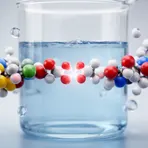
To break a chemical into smaller parts using water
Surface Forms
Morphology
Etymology
Hydrolyze comes from the Greek parts hydro- 'water' and -lyze 'to break', the same '-lyze' you see in analyze, so to hydrolyze something is to 'break' it apart using water.