
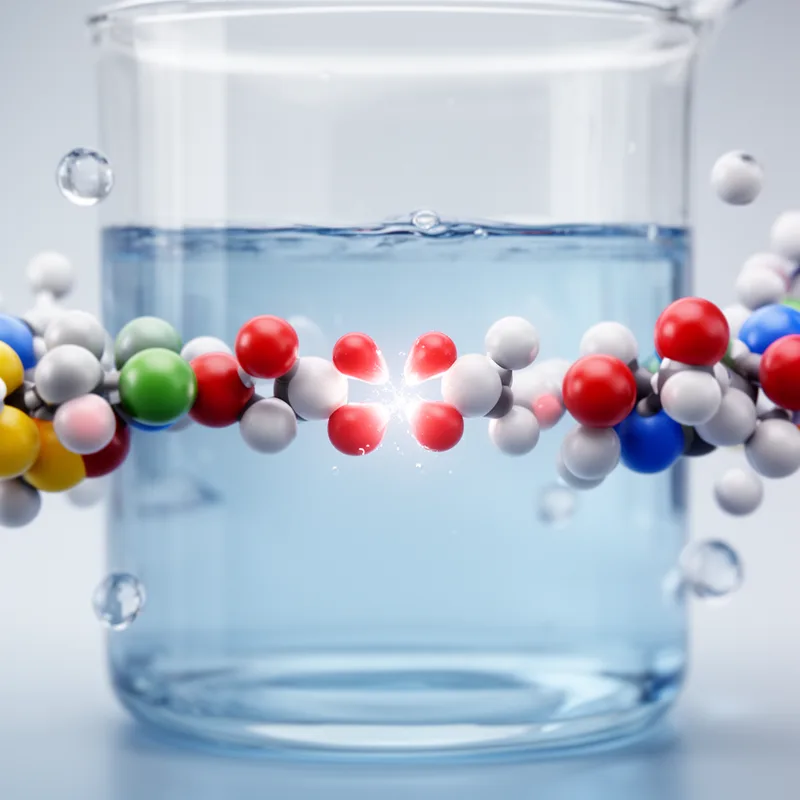
to hydrolise
- verb
- /haɪˈdrɒlaɪz/
- UK
- The enzyme will hydrolise the starch into sugars.
Examples
-
Enzymes can hydrolise proteins into their constituent amino acids.
-
Industrial processes often hydrolise fats to produce soap.
-
Certain acids are used to hydrolise cellulose into glucose.
-
You must hydrolise it!
-
Certain acids are used to hydrolise cellulose into glucose.
-
Enzymes can hydrolise proteins into their constituent amino acids.
-
Industrial processes often hydrolise fats to produce soap.
Synonyms

 3
8.6
3
8.6

To break a substance into smaller parts using water

To break a chemical into smaller parts using water
Surface Forms
Morphology
Etymology
Hydrolise comes from the parts hydro- which means 'water' and -lyse which means 'to break' or 'loosen', the same hydro- you see in hydrogen and the -lyse in analysis. So, to hydrolise something is to 'break it with water', which is exactly what happens when water makes a compound split.