
humus
 2
5.8
2
5.8

- noun
- /ˈhjuːməs/
- Specialized
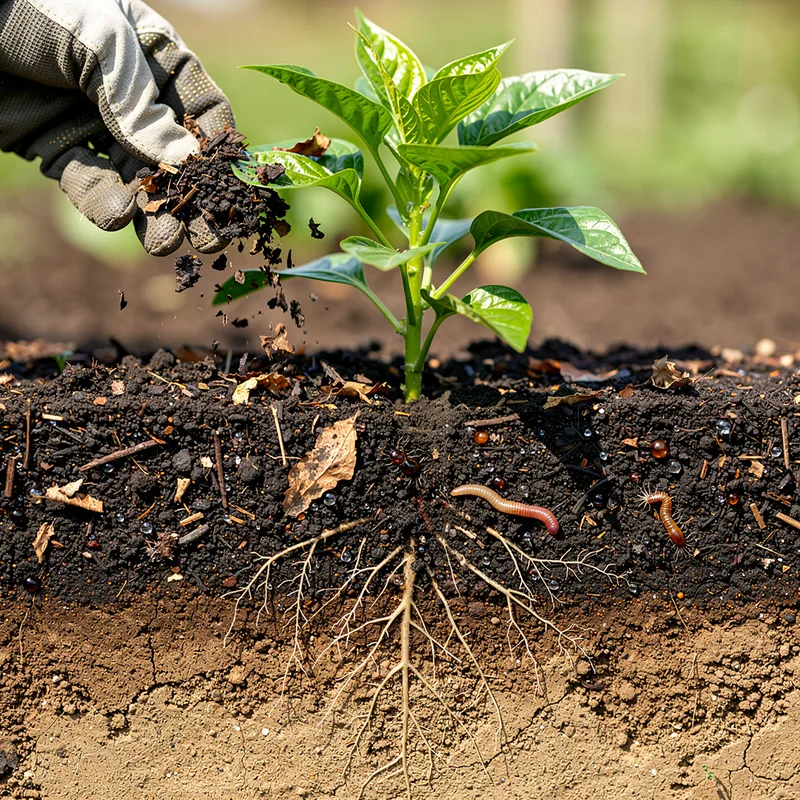
- The final product of composting, finished compost, is primarily composed of three different components: humus, microbial mass, and ash.
- organic humus
- humus product
Loading YouTube…
Watch on YouTubeIt's so it's got that peat humus and peat Moss and it's so spongy.
- It's so it's got that peat humus and peat Moss and it's so spongy.
- So if you can hold more carbon in the soil, carbon becomes topsoil or humus.
Examples
-
We are talking equal parts humus and manure and a whole hell of a lot of charcoal.
-
So, most of it was thrown away with the insoluble humus and minerals in soil.
Academic text (2002) -
And from page 40: Clay and humus carry a minus charge.
Blog text (21) -
Processing organics into a humus product
Academic text (1999) -
Plants and animals multiplied, died, decayed, and formed humus to support a richer life.
Fiction book (1992) -
The mass of humus and fern roots acts as a sponge that soaks up and stores rainwater.
Academic text (1991) -
When added to soils, compost adds organic bulk, increased earthworm populations, humus, and cation exchange capacity.
Academic text (1995) -
The gardener added humus to the flower beds to improve soil fertility and moisture retention.
-
Organic humus enriched the soil, helping the plants thrive in the garden.
-
To create compost, kitchen scraps decompose into nutrient-rich humus that enhances garden soil.
Synonyms

A dark material made from dead plants and animals found in soil and peat
How Fertile

Surface Forms
Etymology
The word humus comes from the Latin humus, meaning 'ground' or 'earth'. It names the dark, earthy material that forms when leaves and plants break down in soil, and you can see the same root in humble, which originally meant 'close to the ground'.