

horse bean
- noun
- /hɔrs bin/
- UK
- The farmer planted horse bean to feed his livestock through the winter.
Examples
-
Farmers often grow horse beans for livestock feed.
-
The horse bean is rich in protein.
-
Horse bean is well-suited to poor soils and provides valuable nutrition for animals.
-
After harvesting the wheat, they alternated the field with a crop of horse bean.
-
Farmers often grow horse bean as a nutritious feed for their cattle.
-
The farmer decided to plant horse bean to ensure his animals had enough food during the winter.
-
A crop of horse bean improves soil quality and provides excellent nutrition for livestock.
Synonyms
 6
4.6
6
4.6

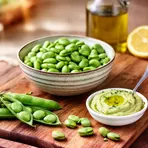
A type of broad bean used in Mediterranean cooking
 5
3.1
5
3.1
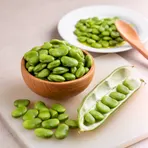
A large flat seed from the broad bean plant that people cook and eat

A tall plant grown for large flat seeds eaten by people and fed to animals
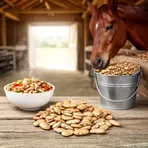
A seed from the broad bean plant used as food for people and animals

A garden plant grown for its large flat beans that people or animals eat

An upright plant grown for its large flat edible seeds and food for animals

A large flat bean that people cook and eat, also called fava

A plant from Europe and Asia that makes large flat beans people and animals eat

A plant from Europe that produces large flat seeds eaten by people and fed to animals
Surface Forms
Morphology
horse + bean
The compound follows a straightforward noun+noun composition where 'horse' modifies 'bean', so a learner who knows both words will readily infer it refers to a kind of bean associated with horses or used for horses (i.e., animal feed). This compositional pattern is common cross-linguistically, making the meaning predictable even if the learner doesn't know the botanical specifics.
Etymology
Horse bean comes from farming: these large beans were mainly grown for horses and other animals to eat. So the name now means a kind of 'broad bean' used as 'animal feed'.