
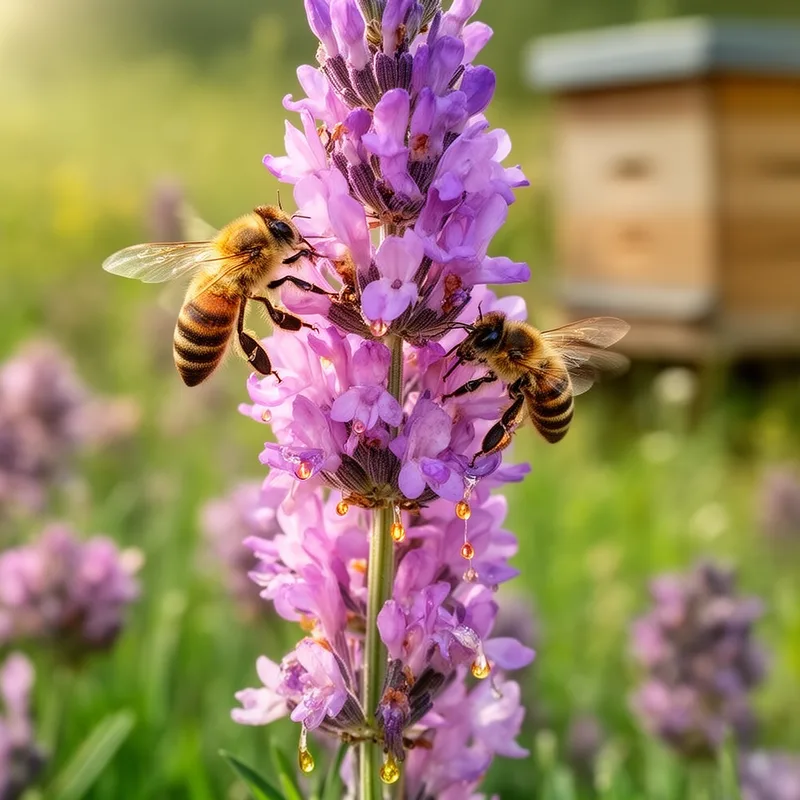
honey plant
- noun
- /ˈhʌni plænt/
 :
planta mielera
:
planta mielera
- Lavender is a popular honey plant that attracts many bees in the summer.
Examples
-
Beekeepers often plant fields of clover, a well-known honey plant, to help their hives thrive.
-
The garden was full of honey plants, making it an ideal spot for local pollinators.
-
The honey plant attracts many bees.
-
Many honey plants bloom in the spring.
-
Beekeepers often plant fields of clover, a well-known honey plant, to help their hives thrive.
-
Lavender is a popular honey plant that attracts many bees in the summer.
-
The garden was full of honey plants, making it an ideal spot for local pollinators.
Synonyms
A two-year plant with white flowers that bees visit and animals eat
A plant with white, sweet-smelling flowers that farmers grow to feed animals and attract bees
A small Australian plant with flowers that make a lot of sweet nectar for bees

An Australian shrub with groups of sweet flowers that attract bees and birds
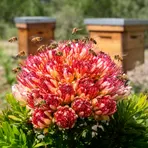
A shrub with flowers that make a lot of nectar for bees to make honey
Surface Forms
Morphology
The meaning 'a plant that produces nectar suitable for bees to make honey' is directly and transparently derived from combining 'honey' (the sweet substance produced by bees) with 'plant' (a photosynthetic organism). This noun-noun modifier pattern indicating an association or source is common cross-linguistically, so a B1 learner who knows both constituents will readily infer the intended meaning.
Etymology
Honey plant comes from honey and plant: it is a plant that gives sweet nectar for bees to 'make honey'. So a honey plant today means a plant that attracts and feeds bees.

