

white sweet clover
- noun
- /waɪt swit ˈkloʊvər/
- Specialized
- Farmers often plant white sweet clover to enrich the soil and provide forage for livestock.
Examples
-
The fields were full of white sweet clover, attracting bees throughout the summer months.
-
The pleasant fragrance of white sweet clover filled the air near the apiary.
-
The fields were full of white sweet clover this spring.
-
Farmers often plant white sweet clover to improve soil health.
-
Farmers often plant white sweet clover to enrich the soil and provide forage for livestock.
-
The fields were full of white sweet clover, attracting bees throughout the summer months.
-
The pleasant fragrance of white sweet clover filled the air near the apiary.
Synonyms
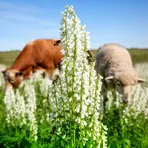
A two-year plant with white flowers that bees visit and animals eat
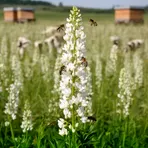
A tall plant with scented white flowers that bees visit for nectar and that is sometimes used for animal feed

A plant grown for hay that makes soil richer for other plants
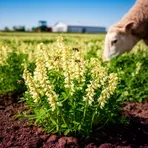
A plant like a clover with sweet flowers used to feed animals and improve soil
Surface Forms
Morphology
The phrase denotes a type of clover described by the adjectives 'white' and 'sweet', so a learner who knows 'white' (color), 'sweet' (pleasant/aromatic) and 'clover' (a small fodder plant) can infer it is a clover with a sweet scent and white flowers. This is a straightforward adjectival composition common in many languages and thus fully compositional for a B1 learner.
Etymology
White sweet clover is a simple picture: the plant has small white flowers, a sweet smell, and looks like clover. Farmers planted it to improve the soil and to feed animals, and bees liked it, so the name now means a plant 'used for animal feed and to attract bees'.

