
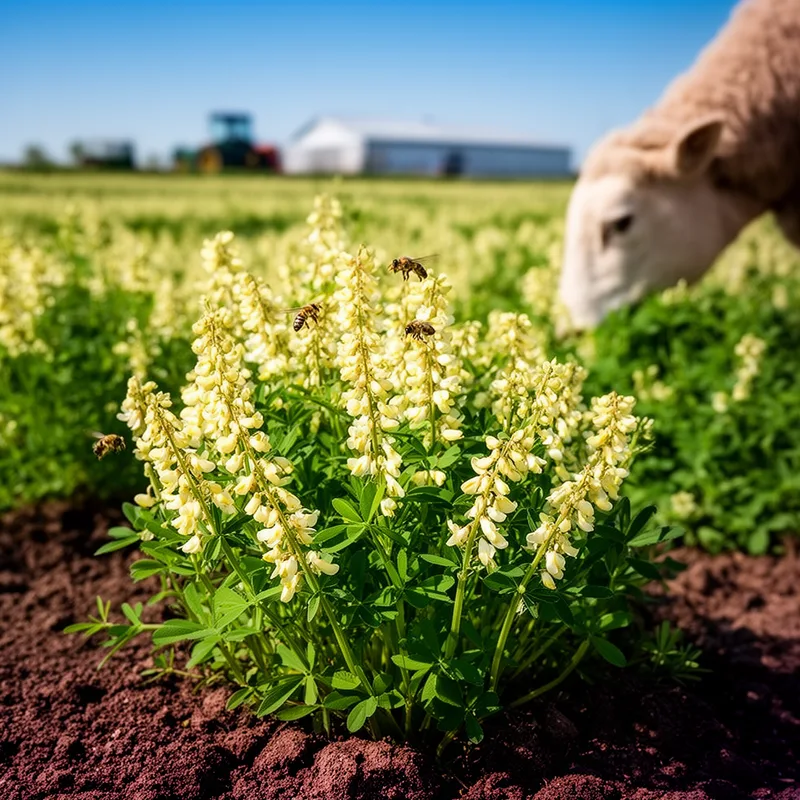
Melilotus
- noun
- /ˌmɛlɪˈloʊtəs/
- Specialized
- Several species of Melilotus are widely grown as cover crops to improve soil fertility.
Examples
-
Farmers commonly grow Melilotus for forage.
-
The distinctive fragrance of Melilotus makes it a popular choice for attracting bees.
-
Researchers studied the tolerance of Melilotus to saline soils in agricultural settings.
-
The Melilotus plant is often used for soil improvement.
-
Farmers commonly grow Melilotus for its ability to improve soil fertility and provide forage for livestock.
-
The leguminous plant Melilotus is often recommended for its benefits in enhancing soil quality.
-
In many agricultural systems, Melilotus is utilized as a cover crop to help restore nutrient levels in the soil.
Synonyms
A plant with small yellow flowers that farmers grow to feed animals and improve soil

A plant grown for hay that makes soil richer for other plants
Compounds

- Specialized
A plant with yellow flowers from Europe and Asia used to improve soil and give a mild sweet scent
Surface Forms
Etymology
Melilotus comes from old Greek parts meli- meaning 'honey' and -lotus meaning 'plant', so it literally means 'honey plant'. That's why Melilotus is called sweet clover and has a sweet smell that attracts bees.

