

homozygosity


 1
9.9
- noun
- /ˌhoʊməˈzaɪɡənəsi/
- Specialized
- Individual inbreeding and historical demography can be estimated by analyzing runs of homozygosity (ROH), which are indicative of chromosomal segments of identity by descent (IBD).
Examples
-
In many species, homozygosity is crucial for maintaining uniformity in traits across generations.
-
Ultimately, the N estimate is determined by comparing the observed data to the simulated data for a series of statistics relating genetic variation to N e, including expected heterozygosity, number of alleles per locus, mean and variance of multilocus homozygosity, and others.
Academic text (2009) -
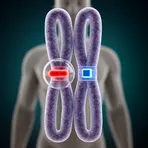
The condition of homozygosity occurs when an individual carries two identical alleles for a specific gene.
-
Higher levels of homozygosity can decrease the genetic variation within a population, affecting its adaptability.
Antonyms
How Similar

Surface Forms
Morphology
homozygosity = homozygous (semi-transparent) = homo + zygo + ous + ity
Forming the abstract noun with -ity from the adjective 'homozygous' is a regular and predictable derivation.
Etymology
Homozygosity comes from homo- meaning 'same', the Greek root zygos meaning 'yoke' or a tool that joins two things, and the ending -ity meaning 'state'. So it is like the 'state of being joined the same', which helps explain why homozygosity means having two identical copies of a gene.