
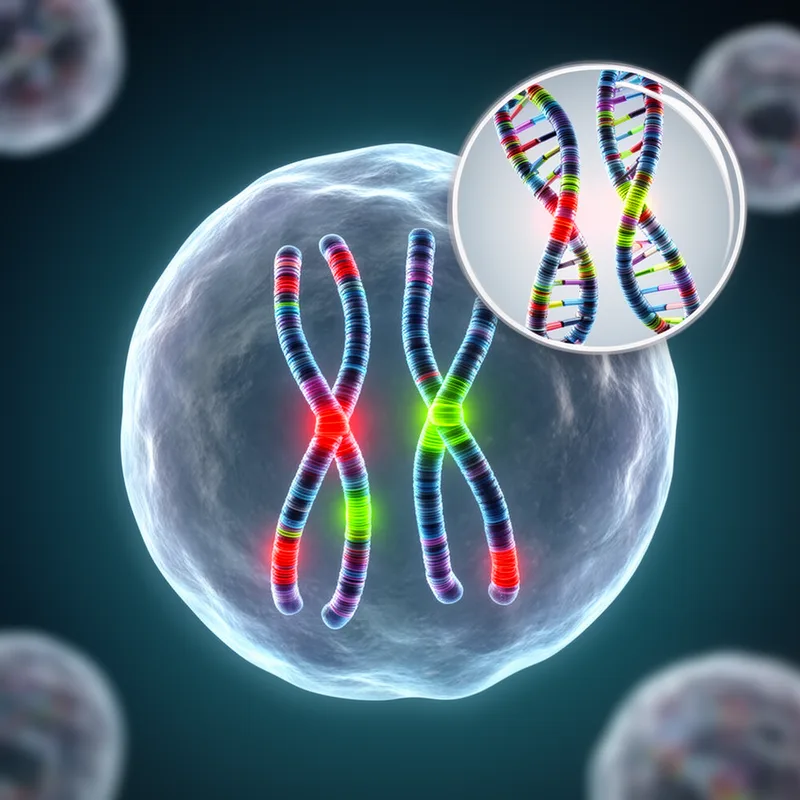
homozygous
 1
9.7

- adjective
- /ˌhoʊməˈzaɪɡəs/
- Specialized
- Individuals who have a homozygous dominant taste allele on chromosome 7 are called super-tasters, whereas homozygous recessive individuals are called non-tasters.
- homozygous genotype
- homozygous recessive
- homozygous individuals
Loading YouTube…
Watch on YouTubeAnd a true breeding strain in this case will be a homozygous recessive strain.
- And a true breeding strain in this case will be a homozygous recessive strain.
Examples
-
Individuals with a homozygous genotype inherit the same allele from both parents.
-
We found a high rate of underlying chronic diseases among the patients in this study, especially homozygous sickle cell anemia and diabetes mellitus.
Academic text (2014) -
The homozygous dominant is what gets the great bud color.
-
However, all homozygous knockout mutants died within a few days.
Academic text (2009) -
Each of these techniques allows the detection of homozygous and heterozygous loci for each DNA sample.
Academic text (2010) -
And a true breeding strain in this case will be a homozygous recessive strain.
-
We found that all homozygous amh mutant fish displayed female-biased sex ratios.
Academic text (2017) -
In contrast, among African Americans, S allele carriers had lower neuroticism scores than those homozygous for the L allele.
Academic text (2016) -
Homozygous females had similar phenotypes to homozygous males, including enlarged abdomens and hypertrophic ovaries (Figure 2A).
Academic text (2017) -
Each person was classified as a homozygous secretor (SeSe), a heterozygous secretor (Sese428), or a nonsecretor (se428se428).
Academic text (2012)
Antonyms
How Heterozygous
- Specialized
1
9.9

- Specialized
1
9.7
Surface Forms
Morphology
homozygous = homozygote (semi-transparent) = homo + zygote + ous
Formation from the noun 'homozygote' by adding the adjectival suffix '-ous' is regular, but the scientific combining forms are domain-specific and may be unfamiliar to general learners.
Etymology
Homozygous comes from homo- meaning 'same' and zygous from a word for a 'yoke', a tool that joins two animals. So, homozygous describes two copies of a gene that are 'the same', which is why it means having identical versions of that gene.