

heterozygous
 1
9.9

- adjective
- /ˌhɛtəroʊˈzaɪɡəs/
- Specialized
- His genetic report revealed that he was heterozygous for the BRCA1 gene mutation.
- heterozygous mutation
- heterozygous individuals
- heterozygous advantage
Examples
-
We identified a heterozygous mutation in the MCP gene in one family.
Academic text (2003) -
Each person was classified as a homozygous secretor (SeSe), a heterozygous secretor (Sese428), or a nonsecretor (se428se428).
Academic text (2012) -
OK, But again, these are heterozygous animals.
-
Such testing allows breeders to detect heterozygous plants and eliminate them from the breeding program.
Academic text (2003) -
Heterozygous plants won't breed true, and some of their offspring will be susceptible to virus attack.
Academic text (2003) -
Findings: We identified a heterozygous mutation in MCP, a surface-bound complement regulator, in two patients with a familial history of HUS.
Academic text (2003) -
The researchers tested the organism and found it to be heterozygous for a specific trait.
-
In plants, a heterozygous genotype can lead to variations in physical characteristics.
Antonyms
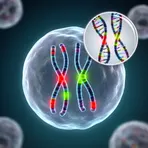
How Heterozygous
- Specialized
1
9.9

- Specialized
1
9.7
Surface Forms
Morphology
heterozygous = hetero + zygous
Formed from the productive prefix 'hetero-' plus the combining form 'zygous'; the formation is regular but relies on technical biological terminology that many learners may not know.
Etymology
The word heterozygous comes from Greek parts hetero- meaning 'different' and zygous from a word for 'yoked' or 'joined', the same root as zygote. So heterozygous literally means 'different things joined', which helps you remember it describes a living thing that has two different versions of the same gene.