
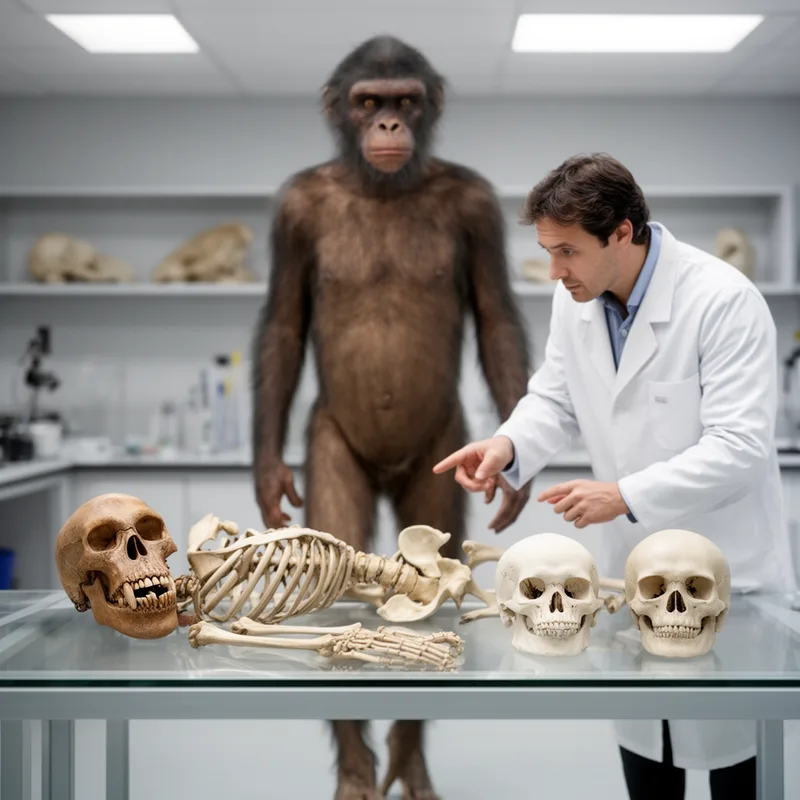
hominine
- adjective
- /ˈhɒmɪnaɪn/
- Specialized
- Unlike earlier apes, hominine ancestors began to walk habitually on two legs.
Examples
-
The fossil displays several hominine features, such as upright posture and reduced canines.
-
Many hominine traits are unique to humans.
-
Researchers debated whether the ancient bones truly belonged to a hominine species.
-
The study focused on hominine evolution.
-
The fossil displays several hominine features, such as upright posture and reduced canines.
-
Researchers debated whether the ancient bones truly belonged to a hominine species.
-
Unlike earlier apes, hominine ancestors began to walk habitually on two legs.
How Human-like


Surface Forms
Morphology
hominine = hominin (opaque) = homin + ine
Formed from the Latin combining form 'homin-' plus the adjectival suffix '-ine'; the combining form is technical and unfamiliar to average learners, so the meaning is not transparently derivable.
Etymology
Hominine comes from the root homin- meaning 'human' and the ending -ine meaning 'related to'. So hominine describes animals or features that are 'related to humans' or human-like ancestors.