
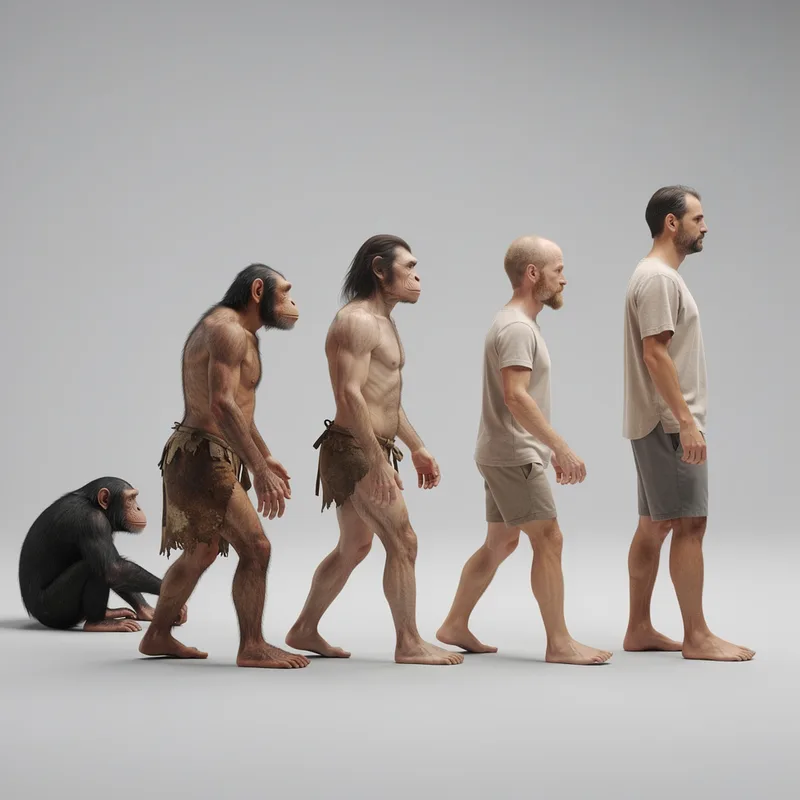
hominin
 1
9.6

- noun
- /ˈhɑːmɪnɪn/
- Specialized
- In general, the overall body size of hominins tends to increase through time, and the size difference between males and females, called sexual dimorphism, becomes less.
Loading YouTube…
Watch on YouTubeSo I think this natural instinct might have been more present in, in early hominins and then possibly they would not hate it that much.
- So I think this natural instinct might have been more present in, in early hominins and then possibly they would not hate it that much.
Examples
-
Scientists discovered fossils of an early hominin that lived alongside dinosaurs millions of years ago.
-
Nonetheless, the hominin fossils have been interpreted as historical physical evidence of our common ancestry with apes.
Blog text (26) -
Laboratory analysis of the bones of a close relative of Lucy revealed how early hominins walked.
Academic text (2011) -
As we sample more ancient hominins, we may eventually find out whether our wiring was really much improved.
Blog text (14) -
They conclude that fossil hominin growth patterns are similar to those of modern great apes.
Blog text (26) -
One anatomical trait that bears a clear resemblance to later hominins is Ardipithecus's teeth.
Academic text (2010) -
Through the millennia that hominins have been in northern Europe, sea levels have risen and fallen as glaciers have retreated and advanced, periodically exposing land the size of California around Britain's shores.
Academic text (2007) -
The museum exhibit showcased tools used by ancient hominins to gather food.
-
Research on the diet of prehistoric hominins has revealed their diverse eating habits.
Surface Forms
Etymology
Hominin is built from the Latin root homin- meaning 'human' or 'man' and the ending -in that names a group in science. So, as a noun a hominin is 'one of the early humans or their close relatives'.