
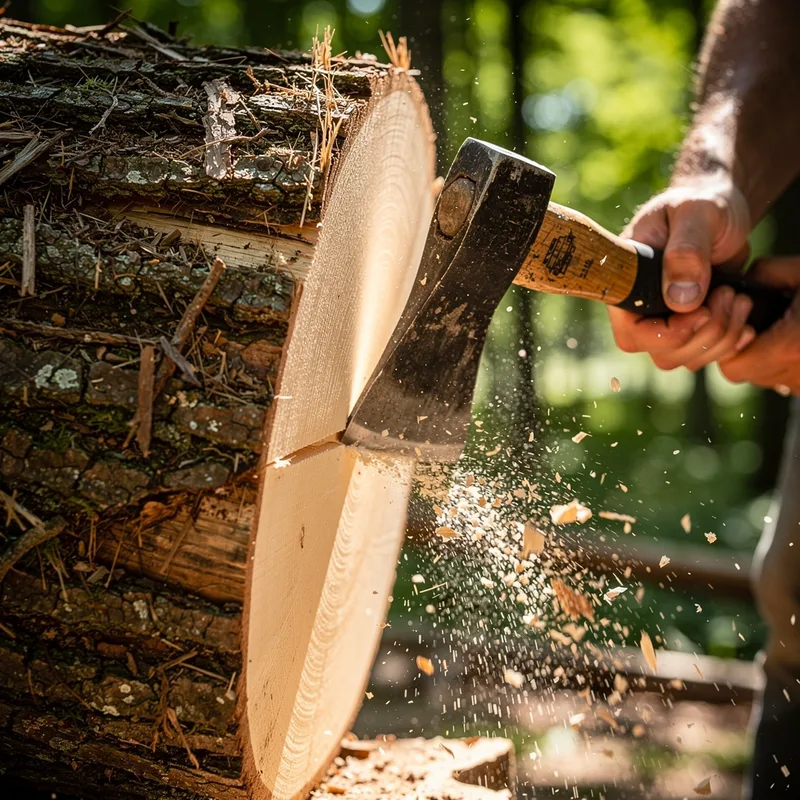
to hew
 8
7.9
8
7.9

- verb
- /hjuː/
- In the southern part of the city, stonemasons proudly hew Buddha figures from alabaster and marble.
Examples
-
George is hewing a beam as Robin watches from a chair.
Fiction book (2001) -
The carpenter may hew down a tree and work with it as he needs or pleases.
Fiction book (1991) -
Send him to the forest to hew fresh timbers for the walls.
-
I hewed out a tiny sailing canoe, and was swept out to sea by some great current.
-
A five-foot-wide stack of hand-hewed beams is piled pyramid style, making movement in the room next to impossible.
Fiction book (2001) -
The carpenter used an axe to hew the logs into suitable beams for the cabin.
-
He began to hew the large block of wood into a beautiful sculpture.
-
After hours of labor, she managed to hew a path through the dense underbrush.
Synonyms
 85
1.0
85
1.0
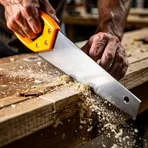
To cut wood using a tool with a thin toothed blade

 1
4.6
1
4.6
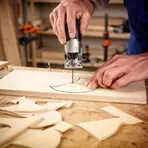
To cut shapes in wood with a small electric saw
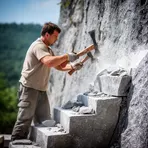
Cut a piece of wood or stone into a shape with a tool like an axe
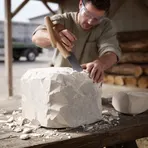
To shape wood or stone without smoothing the surface

To cut wood by two people pulling a long saw back and forth
Phrasal Verbs
How Forceful

Surface Forms
Etymology
Hew comes from an old English verb heawan, which meant 'to cut' or 'to chop'. So to hew wood is to cut or shape it with a heavy tool like an axe, and that is why we talk about someone 'hewing a canoe' or 'hewing logs'.