
heterophonic


 1
9.9
- adjective
- /ˌhɛtəˈrɒfənɪk/
- Specialized
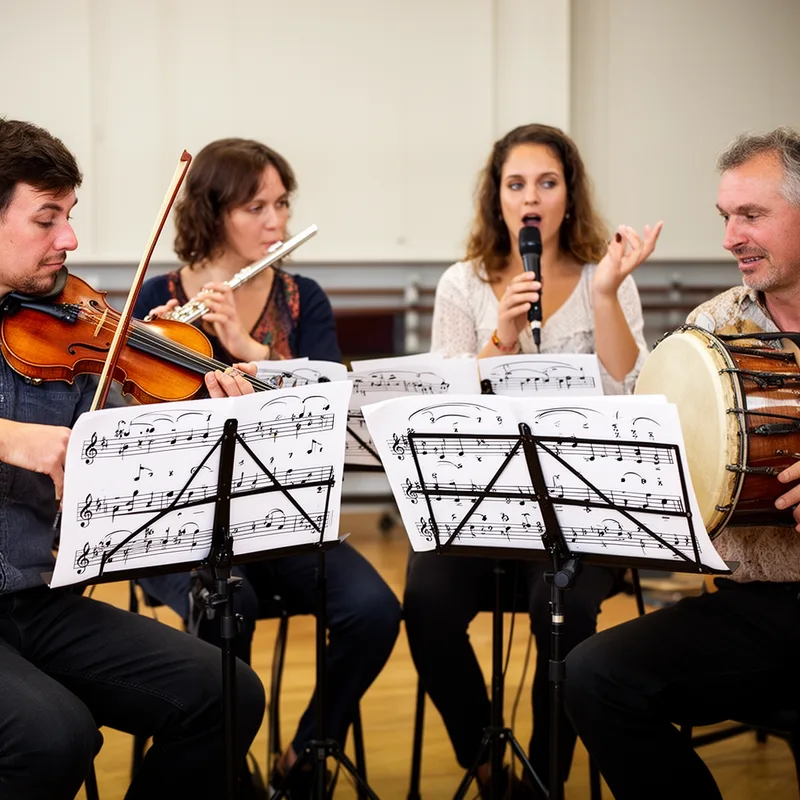
- In a heterophonic arrangement, each musician adds their unique embellishments to the same melody.
Examples
-
The choir's performance showcased their talent for heterophonic singing, with each member harmonizing differently.
-
Polyphonic improvisation should thus be viewed as a fundamental element of early childhood music experiences, whether it be the antiphonal or canonic singing of chants or the heterophonic playing of instruments.
Academic text (2014) -
During the rehearsal, the band experimented with heterophonic textures, allowing them to explore variations of the main tune.
How Polyphonic
- Specialized
1
7.2

- Specialized
1
9.9
- Specialized
1
8.4
- Specialized
1
8.1
Surface Forms
Morphology
heterophonic = heterophone (semi-transparent) = hetero + phon + ic
The term 'heterophonic' is derived from 'hetero' (different) and 'phon' (sound), but its specific musical meaning requires specialized knowledge.
Etymology
Heterophonic comes from Greek parts hetero- meaning 'different' and -phonic meaning 'sound', like the 'phone' in telephone. So, heterophonic music is when several players sing or play 'different' versions of the same tune at the same time, making a rich, layered sound.