

hemosiderosis
- noun
- /ˌhɛməsɪdəˈroʊsɪs/
- Specialized
- Her bronchoscopic alveolar lavage and open lung biopsy were consistent with the diagnosis of idiopathic pulmonary hemosiderosis (IPH).
- pulmonary hemosiderosis
- idiopathic hemosiderosis
Examples
-
The doctor explained that hemosiderosis can develop due to repeated blood transfusions, leading to excess iron in the body.
-
Patients with hemosiderosis often experience symptoms related to iron overload, such as fatigue and joint pain.
-
First attacks during the persistent presence affected by the normal to either hemosiderosis bulbi.
Blog text (24) -
These areas were associated with recent and old intra-alveolar hemorrhages with hemosiderosis.
Academic text (2007) -
Idiopathic pulmonary hemosiderosis (IPH) is a rare condition that is rarely seen in the adult population.
Academic text (2007) -
Idiopathic pulmonary hemosiderosis (IPH) is an uncommon disorder and is particularly rare over the age of 17.
Academic text (2007) -
Keywords: Pulmonary hemosiderosis; Hemoptysis; Open lung biopsy; dyspnoea.
Academic text (2007) -
Infants in a Cleveland outbreak were reported to have pulmonary hemosiderosis, a sign of an uncommon lung disease that involves pulmonary hemorrhage.
Academic text (2003) -
Regular monitoring is essential for individuals diagnosed with hemosiderosis to manage the risk of organ damage from iron accumulation.
Synonyms
 2
9.9
2
9.9

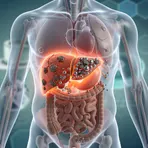
A condition in which too much iron builds up in the body and damages organs like the liver

Too much iron in the body that can damage organs
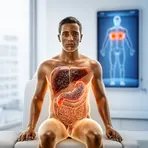
A condition where too much iron builds up in the body and damages organs
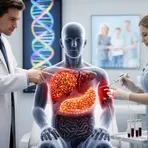
An inherited condition that makes the body store too much iron and can damage organs

A condition passed down in families where too much iron builds up in the body and harms organs

A condition in which the body holds too much iron because of repeated blood transfusions or a high-iron diet
Surface Forms
Morphology
hemosiderosis = hemosiderin (opaque) = hemo + sider + osis
The relation is a straightforward medical formation: the disease suffix '-osis' is added to the noun 'hemosiderin', making the formation formally clear though technical.
Etymology
Hemosiderosis breaks into three parts: hemo- meaning 'blood', sider- meaning 'iron', and -osis meaning 'condition'. So hemosiderosis describes a condition where iron from blood 'builds up' in the body's tissues, which is why doctors use it for that medical problem.