

idiopathic hemochromatosis
- noun
- /ˌɪdiəˈpæθɪk ˌhiːməˌkroʊməˈtoʊsɪs/
- Specialized
- The patient was diagnosed with idiopathic hemochromatosis after routine blood tests revealed elevated iron levels.
Examples
-
Early detection of idiopathic hemochromatosis can help prevent serious complications such as liver damage.
-
Genetic testing confirmed his condition as idiopathic hemochromatosis, which required lifelong management.
-
Patients with idiopathic hemochromatosis often experience fatigue.
-
Is idiopathic hemochromatosis hereditary?
-
Early detection of idiopathic hemochromatosis can help prevent serious complications such as liver damage.
-
The patient was diagnosed with idiopathic hemochromatosis after routine blood tests revealed elevated iron levels.
-
Genetic testing confirmed his condition as idiopathic hemochromatosis, which required lifelong management.
Synonyms
 2
9.9
2
9.9

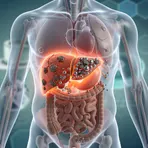
A condition in which too much iron builds up in the body and damages organs like the liver

An inherited condition that makes the body store too much iron and can damage organs

A condition where too much iron builds up in the body and damages organs

Too much iron in the body that can damage organs
Surface Forms
Morphology
The phrase is compositionally formed: 'idiopathic' means 'of unknown cause' and 'hemochromatosis' denotes an iron‑accumulation disorder, so a learner who knows both constituents can infer 'hemochromatosis of unknown cause'. It follows a standard adjective + noun pattern and is therefore immediately derivable, despite being a technical medical term.
Etymology
Idiopathic hemochromatosis names a condition where the body collects too much iron: idiopathic means 'unknown cause' and hemo- and -chromatosis point to blood and excess iron. Imagine iron piling up inside organs like rust on a machine — that image explains why the term describes dangerous iron build-up that can damage the body.