
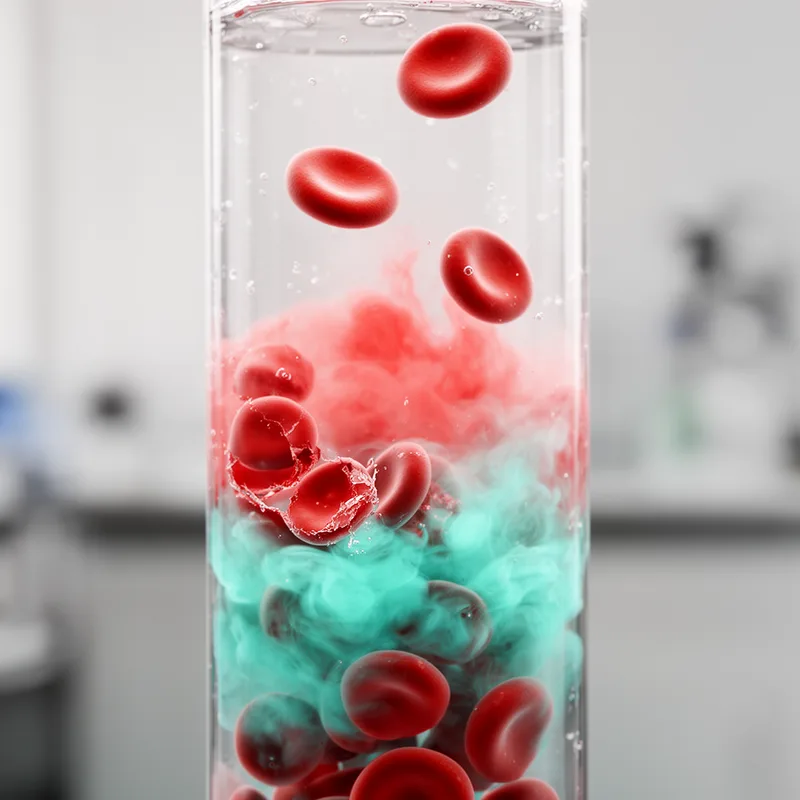
hemolysin
- noun
- /hɪˈmoʊlɪsɪn/
- Specialized
- Appearance of clearing zone around the bacterial colony indicated hemolysin (Burke et al., 1981).
- hemolysin production
Examples
-
In this study, 42.5% of Shigella isolates were Congo red and hemolysin positive.
Academic text (2009) -
Determination of Congo Red Binding Ability and Hemolysin Production
Academic text (2009) -
Hemolysins are important for the development of sepsis to advanced stages.
Academic text (2017) -
All of the Congo red positive colonies produced β-hemolysin on blood agar.
Academic text (2009) -
Erythrocytes are the main bactericidal cells in the bloodstream, and hemolysins are necessary for bacterial survival in the bloodstream.
Academic text (2017) -
If bacteria survive oxidation on the surface of erythrocytes, they produce hemolysins that destroy erythrocytes or provide bacterial penetration into the inner space of erythrocytes.
Academic text (2017) -
The hemolysin produced by the bacteria caused the destruction of red blood cells in the sample.
-
Researchers discovered that hemolysins can lead to the release of hemoglobin from damaged erythrocytes.
-
The presence of hemolysin in the bacterial culture shows its ability to lyse red blood cells.
Synonyms
A substance that destroys red blood cells and releases their red pigment

A substance that destroys red blood cells and releases the red protein in them
Surface Forms
Morphology
Etymology
Hemolysin comes from two parts that mean 'blood' and 'to break': hemo- (the same root as in hemoglobin) and -lysin ('something that breaks'). So, a hemolysin is a substance that breaks red blood cells and releases hemoglobin.

