
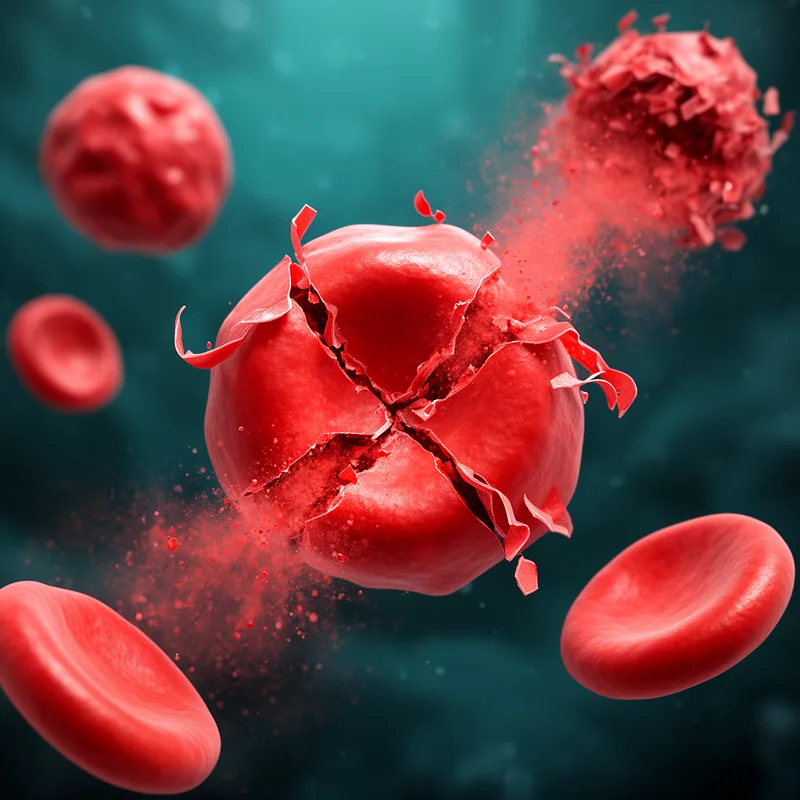
lysis
 1
9.3
1
9.3

- noun
- /ˈlaɪsɪs/
- Specialized
- Cell lysis leads to leakage of myoglobin and other substances, as listed, systemically producing cardiovascular and renal effects.
- cell lysis
- lysis buffer
Examples
-
In vitro, cell lines and primary cells were washed with PBS prior to lysis.
Academic text (2018) -
During the experiment, researchers observed that the lysis of red blood cells released hemoglobin into the solution.
-
In the absence of treatment, the reaction conditions resulted in 70% lysis of erythrocytes compared to total lysis with water.
Academic text (2018) -
The samples were then treated with a proteinase K buffer for lysis.
Academic text (2014) -
Neurons were treated with Bafilomycin A for 3 hours before cell lysis and analysis by Western blot.
Academic text (2018) -
High-quality DNA was yielded from lysis of cells by isolation of DNA, precipitation, and purification.
Blog text (21) -
The absorbance of this mixture at A.sub.405nm was used to determine the hemoglobin release into the supernatant via lysis of the erythrocytes.
Academic text (2018) -
Lysis entailed several freeze-thaw cycles prior to mixing with Ni-NTA agarose beads (QIAGEN).
Academic text (2017) -
The lysis of bacterial cells occurred when exposed to the antibiotic, resulting in their complete destruction.
-
After the treatment, the lysis of infected cells was evident under the microscope, showing their ruptured membranes.
Synonyms
 3
8.8
3
8.8
The breaking of red blood cells that releases hemoglobin into the blood

Cells break open when something destroys their outer membrane

The destruction of bacteria by antibodies or enzymes
Antonyms


Surface Forms
Etymology
The word lysis comes from the Greek root lyo, which means 'to loosen' or 'dissolve'. You can see the same root in analysis and dialysis, and so in biology lysis is when cells are 'broken apart' and their contents are released.