
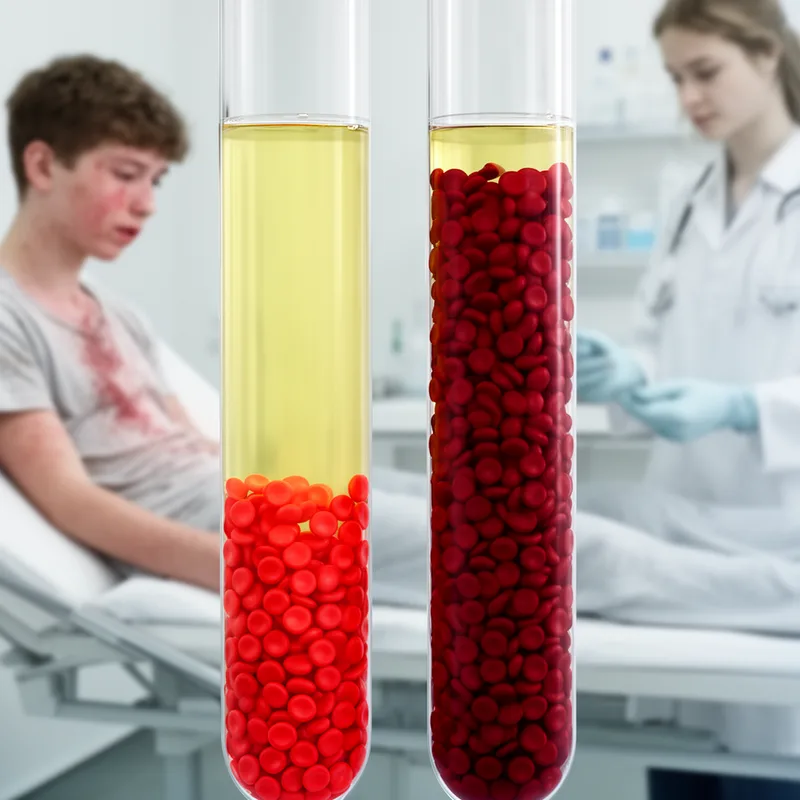
hemoconcentration
- noun
- /ˌhiːmoʊˌkɒntrəˈneɪʃən/
- Specialized
- Dehydration often leads to hemoconcentration, resulting in higher levels of red blood cells in the bloodstream.
Examples
-
Sometimes they also have hemoconcentration; therefore, the hemoglobin and hematocrit counts may be elevated.
Academic text (2004) -
The increase in PCV during lactic acidosis is attributed to the water drawn from the normal circulation, resulting in hemoconcentration and hence elevated PCV (Cannizzo, 2009).
Academic text (2013) -
Thrombocytopenia, left shift, and hemoconcentration are typical abnormal laboratory findings (10).
Academic text (2013) -
Patients with severe burns may experience hemoconcentration as plasma volume decreases significantly.
-
In clinical studies, hemoconcentration was observed in individuals who had lost significant amounts of fluids.
Antonyms
- Specialized


 1
8.6
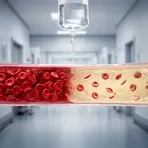
A drop in red blood cell or hemoglobin levels when extra fluid is added to the blood
Surface Forms
Morphology
hemoconcentration = concentration (semi-transparent) = hemo + concentration
Formed by prefixing 'hemo-' (blood) to 'concentration'; the combining form 'hemo-' is technical and may be unfamiliar to general learners, so the medical sense is only partially transparent.
Etymology
Hemoconcentration breaks into hemo- meaning 'blood', the same hemo- you see in hemoglobin, and concentration meaning 'making things closer together'. So, hemoconcentration is when the blood becomes more 'crowded' with cells because the liquid part is lost, which explains why it happens in dehydration or after heavy exercise.