

heliocentric parallax
- noun
- /ˌhiːliəʊˈsɛntrɪk ˈpærəˌlæks/
- Specialized
- By measuring the heliocentric parallax of a nearby star, astronomers can calculate its distance from Earth.
Examples
-
Improvements in telescopes have made the detection of heliocentric parallax more precise for distant objects.
-
During the lecture, the professor explained how heliocentric parallax helps determine the distances between stars.
-
The team presented their findings on heliocentric parallax at the international astronomy conference.
-
The concept of heliocentric parallax is crucial in astronomy.
-
Can you explain heliocentric parallax to me?
-
By measuring the heliocentric parallax of a nearby star, astronomers can calculate its distance from Earth.
-
Improvements in telescopes have made the detection of heliocentric parallax more precise for distant objects.
Synonyms
 4
9.5
4
9.5

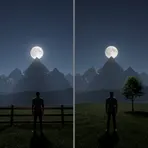
A change in where something looks when you see it from two places, for example the moon

A small change in a star's position when Earth moves around the Sun that shows how far away it is

The small change in a star's position when Earth moves that shows how far it is
How Much Parallax

Surface Forms
Morphology
The noun is a direct composition: 'heliocentric' specifies a sun-centered reference frame and 'parallax' denotes an apparent displacement when seen from different viewpoints, so together they describe the displacement observed from different points in Earth's orbit. This is a compositional, predictable meaning (albeit technical), so a learner who knows both constituents can infer the MWE's sense.
Etymology
Heliocentric parallax: The noun heliocentric parallax names a simple sky trick: heliocentric means 'sun-centred' and parallax is when something seems to 'shift' if you look at it from two different places. Astronomers watch a nearby star from opposite points as Earth moves around the sun, see that small 'shift', and use the measured parallax to find the star's 'distance'.