
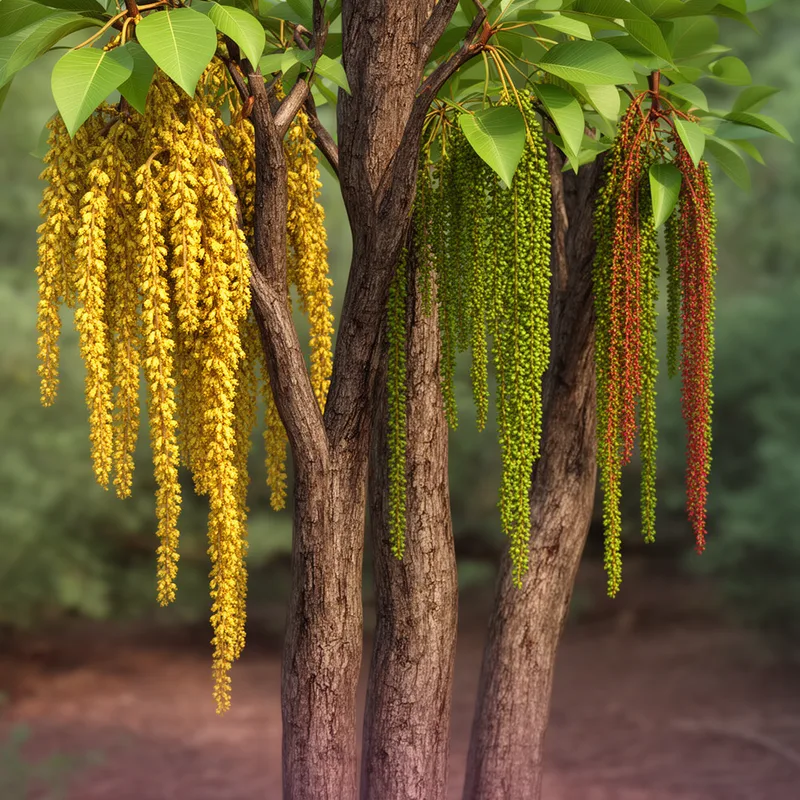
hamamelid dicot genus
- noun
- Specialized
- The hamamelid dicot genus includes plants like witch hazel.
Examples
-
The hamamelid dicot genus often features unisexual flowers arranged in striking catkins.
-
The hamamelid dicot genus includes several species known for their ornamental value.
-
Researchers discovered new characteristics within a previously undescribed hamamelid dicot genus.
-
Many species in the hamamelid dicot genus have medicinal properties.
-
The hamamelid dicot genus contains species that thrive in temperate regions.
-
Botanists study the hamamelid dicot genus for its unique floral structures.
-
In the garden, you can find several shrubs from the hamamelid dicot genus that bloom in late winter.
Synonyms

Small trees or bushes called witch hazel that lose their leaves
An extinct group of plants known from fossils in the Baltic that have flowers like witch hazel
Surface Forms
Morphology
The phrase is compositionally built (modifier + noun): 'dicot' + 'genus' clearly signals a genus of dicotyledonous plants, so the overall taxonomic structure is predictable. However 'hamamelid' is a specialized botanical name/label (and here undefined), meaning the referent is technical and not derivable from ordinary vocabulary; this specialized element makes the item not fully transparent to an average B1 learner. Because the structure is partly predictable but relies on a rare technical headword, the expression is best classified as semi-transparent.
Etymology
Hamamelid dicot genus combines plant-name parts: hamamelid links to the witch-hazel plants, dicot means 'two seed leaves', and genus means a 'group' of related species. So the term is used to name a group of mainly woody flowering plants (like witch-hazel) that often have separate male and female flowers in hanging clusters.

