
dicot


 1
9.1
1
9.1
- noun
- /ˈdaɪkɒt/
- Specialized
- The potential benefits of rhizomatous, or otherwise clonal, growth account at least partially for the high frequency of vegetative reproduction observed in both aquatic monocots and dicots.
- monocots and dicots
- dicot genera
Examples
-
However, the dicot genus Ceratophyllum provides a possible example of punctuated hydrophily.
Academic text (1996) -
Ceratophyllum is a water-pollinated dicot with minute unisexual flowers.
Academic text (1996) -
Some dicots however, do, and some woody dicots are trees, though plenty aren't.
-
In contrast, far fewer dicots are rhizomatous (Grace 1993).
Academic text (1996) -
However, aquatic plants are more common proportionally in monocots than in dicots (Les and Schneider 1995).
Academic text (1996) -
We calculate that white flowers occur in approximately 43% of all aquatic genera (40% of dicots, 48% of monocots; based on data in Cook 1990).
Academic text (1996) -
Including Callitriche and Ceratophyllum (Figure 4), the only hydrophilous dicot genera, hydrophily has evolved as many as nine times in angiosperms.
Academic text (1996) -
Analogous systems that involve self-pollination between unisexual flowers on a plant (geitonogamy) have been described in the dicot Callitriche (Philbrick and Anderson 1992).
Academic text (1996) -
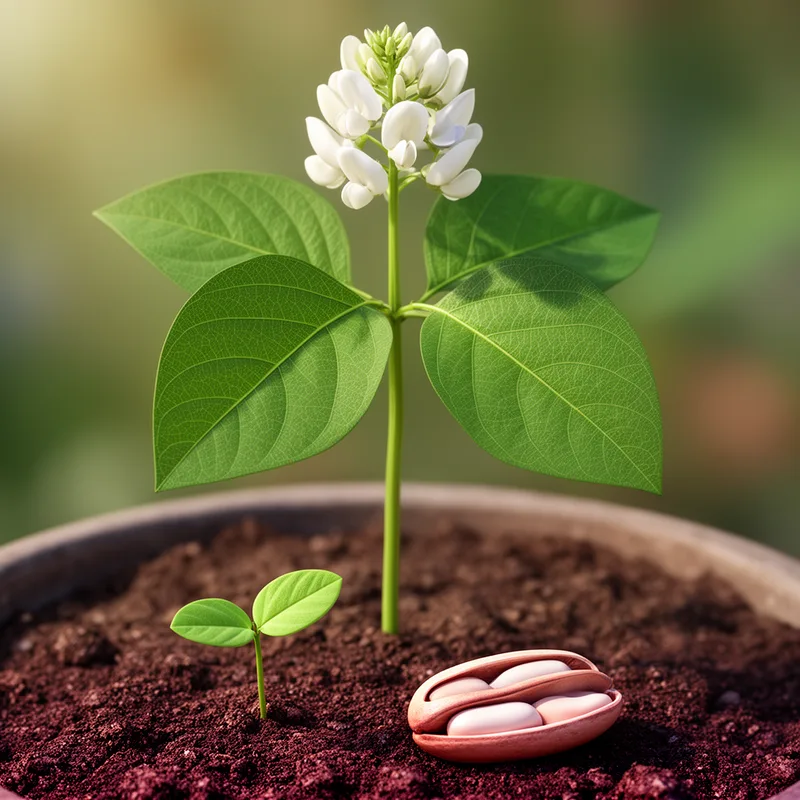
A dicot is a flowering plant that develops from a seed with two embryonic leaves.
-
Many garden plants, such as roses and beans, are classified as dicots due to their two cotyledons.
Synonyms
 1
9.9
1
9.9
A flowering plant with two seed leaves inside its seed

A flowering plant with two seed leaves that grows by adding new layers on the outside
Compounds

- Specialized
A family of flowering plants with two seed leaves including carnations and pinks

- Specialized
A group of plants that make flowers and whose seeds have two seed leaves, like beans and roses

- Specialized
A group of flowering plants that have two seed leaves when they start to grow

- Specialized
A group of related flowering plants including trees, shrubs and herbs

- Specialized
A group of flowering plants that are mostly herbs and sometimes trees or shrubs


- Specialized
A group of flowering plants from an early branch of plant evolution

- Specialized
A group of mostly woody flowering plants like trees or shrubs, often with flowers in long hanging clusters

- Specialized
A group of mostly woody plants that have separate male and female flowers in hanging clusters called catkins

- Specialized
A family of flowering plants like beans and peas that have two seed leaves
Surface Forms
Morphology
dicot = cot (semi-transparent) = di + cot
The prefix 'di-' means 'two', but 'cot' is only meaningful to those familiar with botanical terminology.
Etymology
Dicot comes from the parts di- 'two' and cotyledon 'seed leaf'. So a dicot is a flowering plant whose seed produces two first leaves, which is why many beans and garden flowers are called dicots.