

gumbo soil
- noun
- Specialized
- Farmers often struggle to plant crops on gumbo soil because it holds water and becomes very heavy.
Examples
-
The construction crew complained that the gumbo soil kept clogging their machinery after a storm.
-
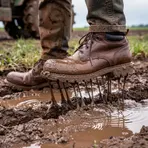
After the rain, the gumbo soil turned into a slippery, sticky mess that was hard to walk through.
-
The gumbo soil in Louisiana is known for its stickiness.
-
Farmers often struggle with gumbo soils during the rainy season.
-
The construction crew struggled to lay the foundation because of the wet gumbo soil that was difficult to work with.
-
Farmers in the region often complain that the gumbo soil becomes too heavy and sticky after heavy rains.
-
In Louisiana, many gardens are planted in gumbo soil, which can retain moisture but is challenging to cultivate.
Synonyms
 1
9.9
1
9.9

Very fine soil that becomes thick and sticky when wet
How Sticky

Surface Forms
Morphology
The compound combines 'gumbo' (silts and clays that become sticky when wet) with 'soil', so the overall meaning—a sticky, fine-grained soil—is directly and transparently derivable from the constituents. This is a straightforward descriptive noun–noun compound following common English composition patterns, so a B1 learner who knows both words will understand it.
Etymology
Gumbo soil comes from the way wet ground sticks and 'gums up' boots and tools, like chewing gum. The word gumbo and the wet soil give the picture of heavy, sticky earth, so the name means ground that is hard to work.