
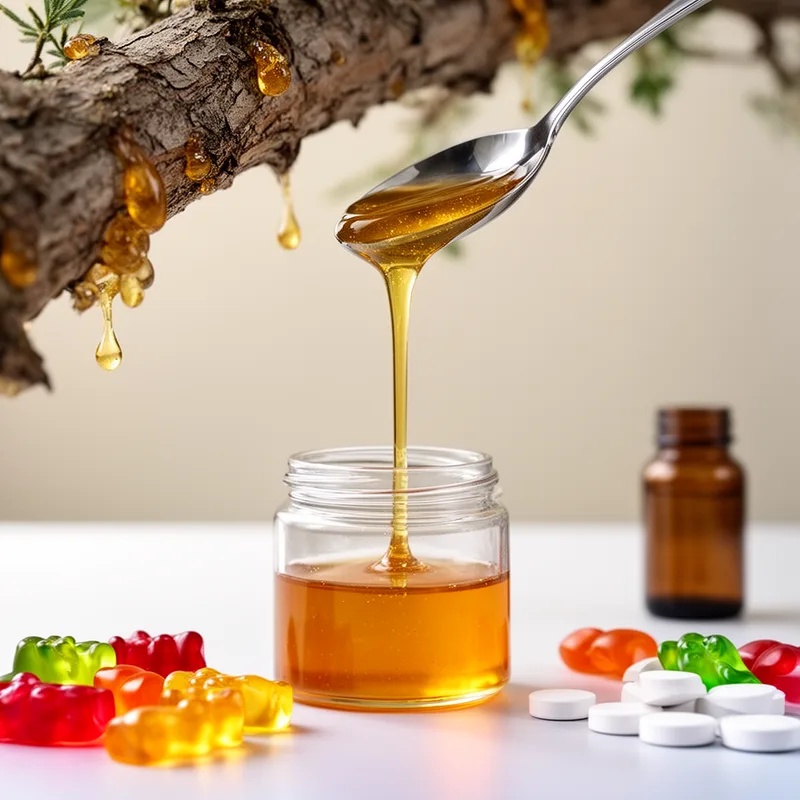
gum arabic


 1
5.5
1
5.5
- noun
- /ɡʌm əˈræbɪk/
- Specialized
- Gum arabic is often added to gum arabic candies to improve their texture and prevent crystallization.
Loading YouTube…
Watch on YouTubeIt requires just a few material elements, cork, wax or gum Arabic.
- It requires just a few material elements, cork, wax or gum Arabic.
Examples
-
The binder (glue) was usually gum arabic, which also acted as a thickener.
Blog text (17) -
Chefs use gum arabic as a thickener in sauces and desserts for a smooth consistency.
-
A mixture of gum Arabic and water is made and this will be an adhesive with which the gold will be attached.
-
Finely powdered red glass mixed with water and gum Arabic is painted on.
-
Gum arabic.
-
It turns Gray OK, and again, the gum Arabic kind of dulls that down just comparing the water one.
-
Here's some tests I did with the glycerin and the gouache binder and I have found that the gum Arabic looks nice.
-
Classic binders are made from gum Arabic, egg yolks, and stand oil (a form of linseed oil). As in oil painting, the perfection of the technology is classically credited to Titian.
Blog text (4) -
In pharmaceuticals, gum arabic serves as a stabilizer in syrups and emulsions.
Synonyms
 1
6.1
1
6.1
A powder from guar seeds used to thicken foods and help make paper and cloth
A natural sticky substance from acacia trees used to thicken food and medicine
A natural gum from trees called acacia near the Senegal River used to thicken or stabilize food and medicines

A natural sticky sweet substance from mesquite tree pods used in food and products
A natural sticky substance from the dhawa tree used to thicken food and other products

A sticky substance that comes from cherry tree bark and is used to make food thicker
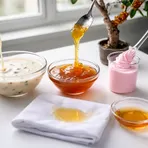
A sticky substance from Asian Sterculia trees used to thicken food, cosmetics, and cloth
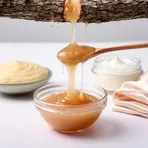
A sticky natural gum from an Asian tree used to thicken food and cosmetics and to make fabrics smooth

A natural gum from Middle Eastern plants used to thicken medicines and dyes
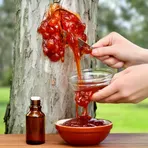
A reddish-brown sticky substance from eucalyptus bark used in medicine and food
Surface Forms
Morphology
The phrase is compositionally built from 'gum' (a sticky natural substance) and 'Arabic' (indicating origin), so a learner who knows both words can infer it is a type of gum associated with Arabic-speaking regions. This gives a clear basic meaning (a specific natural gum), even if detailed uses (e.g., as a food thickener from acacia trees) require extra knowledge.
Etymology
Gum Arabic comes from the sticky sap of acacia trees that was gathered and sold by traders from Arabia and nearby lands. The name shows the parts gum, meaning sticky tree sap, and Arabic, meaning from those traders, so today gum arabic refers to a natural, sticky substance used as a 'thickener' or 'binder' in food, sweets, and medicines.