

ground sloth
 1
9.6
1
9.6

- noun
- /ɡraʊnd slɔθ/
- US
- Mammoth, mastodon, giant ground sloth, horses, camels, and bison all roamed along this coast.
- a giant ground sloth
Loading YouTube…
Watch on YouTubeMastodons, mammoths, giant ground sloths, direwolves, Pleistocene lions, Saber toothed cats, giant elk, giant Beaver.
- Mastodons, mammoths, giant ground sloths, direwolves, Pleistocene lions, Saber toothed cats, giant elk, giant Beaver.
Examples
-
Their extinct ground sloth relatives, walking on the knuckles of their hands and on the sides of their in-turned hind feet, also likely did not set any speed records.
Academic text (2009) -
Paleontologists study the bones of the ground sloth to learn about its behavior and environment during the Ice Age.
-
Even the largest of the ground sloths, the gigantic Megatherium, survived until relatively recently.
Academic text (2009) -
These prehistoric North American camels and horses, ground sloths and elephants must have shared the landscape with an equally diverse assemblage of plants and arthropods (creatures such as insects).
Academic text (1993) -
Fossil remains of the giant ground sloth have been discovered in various locations across North America.
-
The ground sloth, a massive herbivore, lived alongside other large mammals in prehistoric ecosystems.
Synonyms


 1
9.9
1
9.9
A very large extinct ground sloth from South America that lived long ago
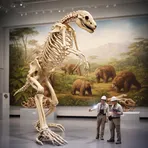
A very large extinct animal like a ground sloth that lived in ancient America

A large extinct ground sloth from South America that lived during the Ice Age

A very large extinct ground sloth that lived in South America long ago

A very large ground sloth that lived in South and Central America and is now extinct

A large extinct ground sloth from South America that lived during the Ice Age
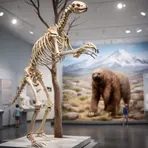
A large extinct mammal like a ground sloth that lived in the Americas
Surface Forms
Morphology
The meaning 'a terrestrial sloth' is directly and compositionally derived from 'ground' (on the earth) + 'sloth' (the animal), signaling a sloth that lives on the ground rather than in trees. This compound pattern (ground + animal) is semantically regular and cross-linguistically common, so a B1 learner who knows both constituents would readily infer the meaning.
Etymology
Ground sloth gets its name from early scientists who compared these huge, slow animals to tree sloths. The word ground shows they lived 'on the ground' rather than in trees, and sloth links them to the slow tree animals, so today the name means a large, extinct sloth that lived on the land.