
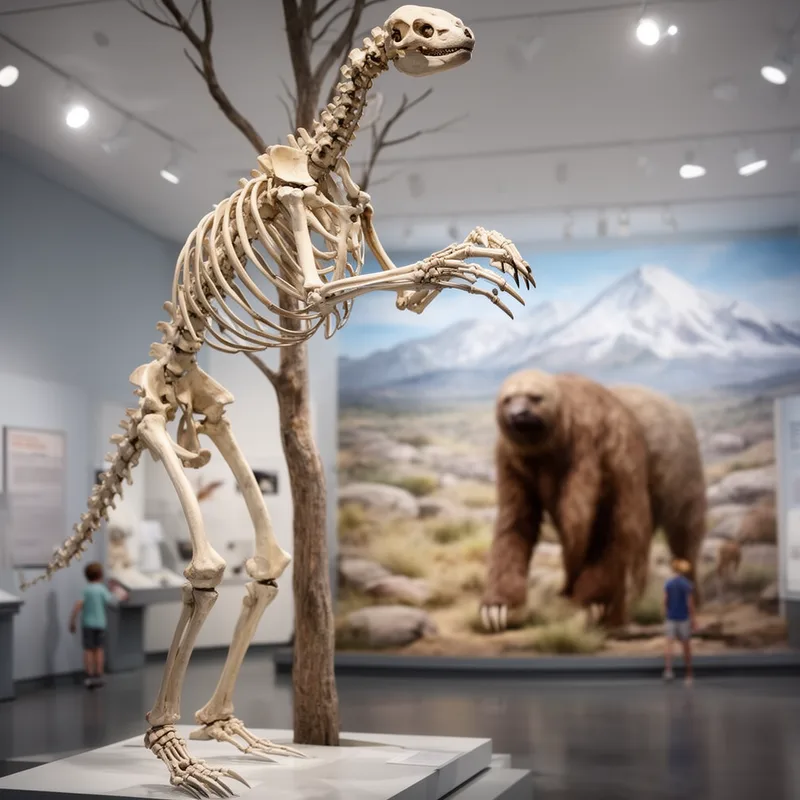
mylodontid
- noun
- /ˌmaɪloʊˈdɪntɪd/
- Specialized
- Scientists believe the mylodontid adapted to a variety of habitats during the Ice Age.
Examples
-
The mylodontid fossils were discovered in South America.
-
A large mylodontid skeleton is displayed at the natural history museum.
-
The fossilized remains of a mylodontid were discovered in the Patagonian caves.
-
Scientists studied the mylodontid remains found in Patagonia.
-
The remains of a mylodontid were discovered in an ancient cave, providing insights into prehistoric life in the Americas.
-
Scientists studied a mylodontid to better understand the evolution of edentate mammals.
-
Fossilized bones of a mylodontid were found alongside those of other extinct species from millions of years ago.
Synonyms

 1
9.6
1
9.6

A very large extinct mammal with long claws that lived on land in the Americas long ago

A very large sloth that lived on the ground long ago and is now extinct
Surface Forms
Morphology
mylodontid = Mylodontidae (opaque) = mylodont + id
The form is a specialist taxonomic formation (member of the family Mylodontidae using '-id'), which is not analyzable by average learners from common vocabulary.
Etymology
The word mylodontid comes from the scientific name Mylodon, which uses Greek parts myl- 'mill' and odont- 'tooth' because the animal had wide grinding teeth. So, a mylodontid is an extinct mammal, like a ground sloth, named for those strong teeth seen in fossils.