

ground beetle


 1
4.5
1
4.5
- noun
- /ɡraʊnd ˈbiːtəl/
- Many gardeners appreciate ground beetles for their role in controlling aphid populations.
- species of ground beetles
- most ground beetles
Examples
-
The ground beetle is a predatory insect that helps keep pest populations under control.
-
But will the Bt corn also kill beneficial bugs such as ground beetles, some of which are fierce predators of rootworms?
Academic text (2003) -
Heather beds are typically left untouched, which is why helpful little critters like ground beetles and spiders call them home.
Blog text (13) -
Ground beetles are ubiquitous and common in both rural and urban areas, where the larger beetles are often mistaken for cockroaches.
Academic text (2003) -
PHOTO (COLOR): Pitfall traps with timed interval units are used to study daily activity cycles of beneficial ground beetles in corn and soybean cropping systems.
Academic text (2003) -
Ellsbury collected 20,000 ground beetles this past growing season—as many as 5,000 in 48 hours—representing 60 different species.
Academic text (2003) -
You can find ground beetles hiding under leaves during the day, as they are nocturnal hunters.
Synonyms
 95
1.0
95
1.0
A small insect with hard front wings that cover its back and a mouth for chewing
 1
9.6
1
9.6
A ground beetle that lives on the soil surface and often eats other insects
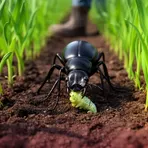
A ground beetle usually black or shiny that eats other insects and helps control pests
How Fast

Surface Forms
Morphology
The meaning 'a beetle that lives on or is associated with the ground' is directly and compositionally derived from combining 'ground' (surface of the earth) and 'beetle' (an insect). This noun–noun compound follows a common, cross-linguistic pattern for location/characterization (e.g., 'groundhog', 'groundwater'), so a B1 learner who knows both constituents will readily infer the intended sense.
Etymology
The name ground beetle comes from a simple picture: it is a small beetle that lives on the ground and hunts other insects. People often found these shiny beetles under rocks eating pests, so the name points to 'a beetle on the ground' that helps protect crops and gardens.