

great anteater
- noun
- /ɡreɪt ˈæntiˌtɚ/
- The great anteater uses its long tongue to extract ants from their nests.
Examples
-
A great anteater can eat thousands of insects in a single day.
-
The great anteater is native to South America.
-
While hiking in Brazil, we spotted a great anteater moving slowly through the grass.
-
Many great anteaters can be found in Brazil.
-
A great anteater can eat thousands of insects in a single day.
-
The great anteater uses its long tongue to extract ants from their nests.
-
While hiking in Brazil, we spotted a great anteater moving slowly through the grass.
Synonyms

 2
2.0
2
2.0

A mammal from Central and South America with a long snout and tongue that eats ants and termites
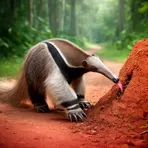
A large mammal from South America with a long tongue and claws that eats ants and termites
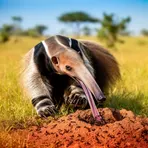
A large South American animal with a very long nose and tongue that eats ants
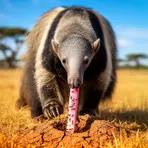
A large hairy animal from South America that eats ants and termites with a long tongue
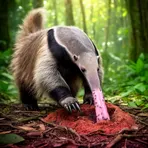
A large hairy South American mammal with a long tongue and strong claws for eating ants

A tropical American animal with no teeth that eats ants and termites
Surface Forms
Morphology
The sense 'a large anteater' is directly and compositionally derived from 'great' (very large) modifying 'anteater' (an animal that eats ants). This adjective+noun pattern is transparent and cross-linguistically common, so a B1 learner who knows both constituents will readily infer the MWE meaning.
Etymology
The name great anteater paints a clear picture: a very large, shaggy animal with a long snout and tongue that probes ant nests and 'eats ants', so it is literally an ant eater. That's why the name refers to a big mammal famous for feeding on ants and termites.