

gray alder
- noun
- /ɡreɪ ˈɔːldər/
- Specialized
- The gray alder is often planted to prevent soil erosion along riverbanks.
Examples
-
The gray alder grows well in wetland areas.
-
Many gray alders line the riverbank.
-
In botany class, we learned how to identify a gray alder by its distinctive leaves.
-
Unlike other species, the gray alder thrives in both wet and dry soil conditions.
-
In botany class, we learned how to identify a gray alder by its distinctive leaves.
-
The gray alder is often planted to prevent soil erosion along riverbanks.
-
The gray alder grows well in wetland areas.
Synonyms
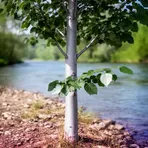
A medium alder tree with grey bark and toothed leaves that grows in Europe and Asia

A tree with toothed leaves that often grows by rivers and has wood that resists rot
Surface Forms
Morphology
The noun phrase is a straightforward composition of the adjective 'gray' and the noun 'alder', so a learner who knows both words can infer it denotes an alder tree that is gray in appearance (e.g., gray bark). This color + noun species naming pattern is cross-linguistically common and follows standard English modifying patterns, making the meaning directly derivable from the constituents.
Etymology
Gray alder is a simple name: gray means its pale, smooth bark and leaves, and alder shows it is that kind of tree. Because of that clear image, people used the name to mean 'a species of alder with gray bark', so we still use it today to identify this tree.

