
Alnus incana
- noun
- Specialized
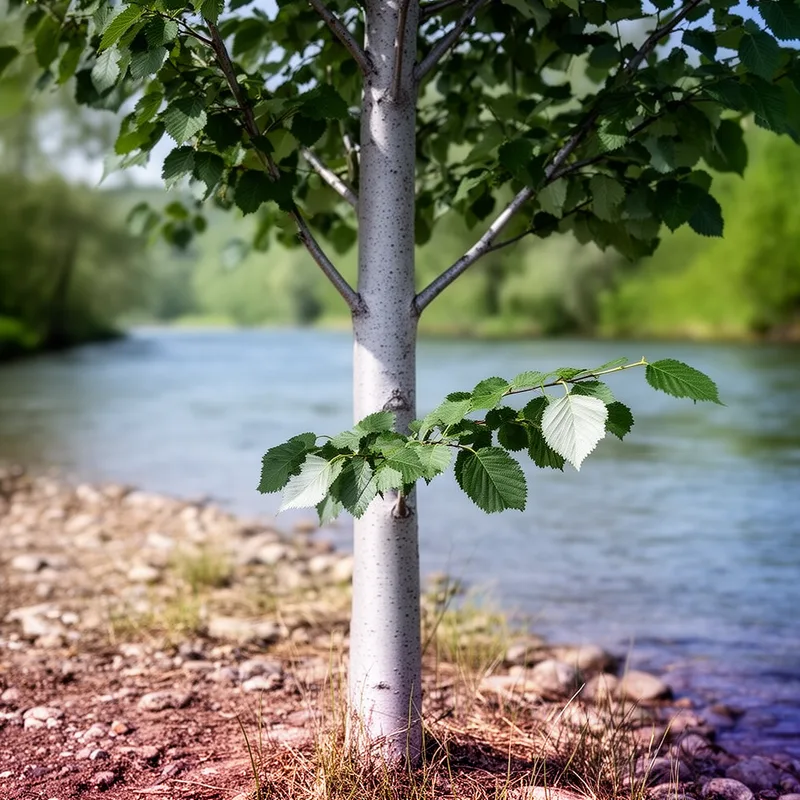
- Alnus incana, also known as the grey alder, can be recognized by its grey bark and serrated leaves.
Examples
-
The leaves of Alnus incana are distinctly serrated and pale beneath.
-
Alnus incana is commonly found along riverbanks in central and eastern Europe.
-
Unlike its relative the black alder, Alnus incana prefers drier soils.
-
The Alnus incana thrives in wet soils.
-
Many birds nest in the Alnus incana trees.
-
The wood of Alnus incana is often used in furniture making due to its durability.
-
In wetland areas, Alnus incana plays a crucial role in stabilizing the soil and providing habitat.
Synonyms

A tree that loses its leaves each year with smooth gray bark and broad leaves
Surface Forms
Morphology
Alnus + incana
The name is compositionally a botanical binomial: genus (Alnus, an alder) plus a species epithet that typically describes a trait (incana ≈ grey/hoary). This makes the meaning potentially derivable if a learner knows taxonomic conventions or the Latin adjective, but for an average B1 learner without Latin or specialist botanical knowledge the name is not transparently interpretable, so it is only partly transparent.
Etymology
Alnus incana comes from Latin words: Alnus means alder and incana means 'grey'. So the name gives a clear image of a grey or speckled alder with pale leaf undersides and grey bark, and that is why it refers to this particular tree.

