

government note
- noun
- /ˈɡʌvərnmənt noʊt/
- After the currency reform, the old banknotes were replaced with new government notes issued by the central bank.
Examples
-
Most day-to-day transactions are carried out with government notes and coins.
-
She collected rare government notes from different countries as a hobby.
-
The old shopkeeper refused to accept a torn government note.
-
I paid for my coffee with a government note.
-
The shop only accepts government notes.
-
The store only accepts U.S. government notes as payment for transactions.
-
Many investors prefer to keep their savings in secure U.S. government notes rather than riskier assets.
Synonyms

 433
1.2
433
1.2

The money used in a country, like coins and paper notes
 295
1.5
295
1.5
Money made of paper that people use to pay for things
 173
1.5
173
1.5
A paper bill used as money or a written promise to pay money
 16
1.6
16
1.6
Money made of printed paper notes that a government uses
 15
5.2
15
5.2
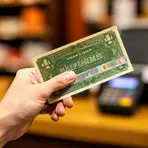
A paper U.S. dollar bill used as money
 7
3.0
7
3.0
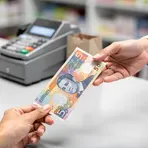
A paper form of money that people use to pay for things
 5
1.7
5
1.7
Paper money issued by a central bank used to pay for things
 3
2.5
3
2.5
Money in printed notes that people use instead of coins
 2
5.1
2
5.1
Paper money the United States Federal Reserve issues for buying things

A piece of paper money issued by a central bank used to pay for things

A piece of paper used as money and issued by a central bank

Paper money that is worth less than one unit of a country's money and is used like coins
Surface Forms
Morphology
The meaning 'a banknote issued by the government' is directly derivable from combining 'government' (the state authority) with 'note' (a paper currency). This is a straightforward attributive noun construction common across languages, so a B1 learner who knows both constituents and the currency sense of 'note' will readily understand the MWE.
Etymology
Government note comes from when the government printed a small note, a piece of paper, and promised it could be used as 'money' instead of coins. That's why government note means 'official paper money' you can use for buying things.