

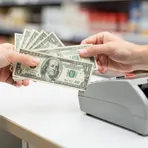
bank bill
- noun
- /bæŋk bɪl/
- I found a bank bill in my wallet while shopping for groceries.
Examples
-
He paid for his lunch with a crisp fifty-dollar bank bill.
-
She deposited the bank bill into her account after receiving it from a client.
-
The old bank bill was rare and valuable to collectors.
-
I paid with a bank bill.
-
Do you have a bank bill to spare?
-
The store only accepts cash, so I need to withdraw a bank bill from the ATM.
-
He gave me a bank bill as change for my purchase at the café.
Synonyms
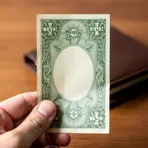
 295
1.5
295
1.5

Money made of paper that people use to pay for things
 173
1.5
173
1.5
A paper bill used as money or a written promise to pay money
 72
1.0
72
1.0
A piece of paper money worth one US dollar
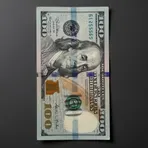 17
2.1
17
2.1
A paper note worth one hundred US dollars
 16
1.6
16
1.6
Money made of printed paper notes that a government uses
 15
5.2
15
5.2
A paper U.S. dollar bill used as money
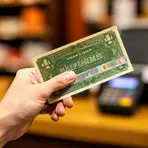 7
3.0
7
3.0
A paper form of money that people use to pay for things
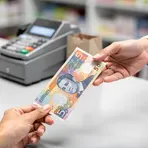 5
1.7
5
1.7
Paper money issued by a central bank used to pay for things
 4
1.0
4
1.0
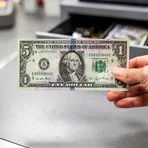
A piece of United States paper money worth five dollars
 4
1.0
4
1.0
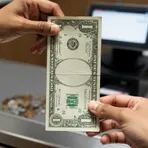
A piece of paper money worth one dollar that you use to pay for things
 4
1.0
4
1.0
A piece of United States paper money worth twenty dollars
 3
2.5
3
2.5
Money in printed notes that people use instead of coins
 3
1.0
3
1.0
Paper money from the United States worth ten dollars
 2
5.1
2
5.1
Paper money the United States Federal Reserve issues for buying things
 1
1.0
1
1.0
A piece of paper money worth fifty dollars in the United States

A piece of paper used as money and issued by a central bank

Paper money issued by a country's central bank used to buy things
Surface Forms
Morphology
The meaning is directly compositional: 'bank' (financial institution) + 'bill' (paper money) yields a bill associated with or issued by a bank. This noun–noun compounding follows a common, cross-linguistic pattern, so a B1 learner who knows both constituents would readily infer the MWE's meaning.
Etymology
Bank bill comes from old times when a bank wrote a small paper bill promising to pay money. People used that paper like money, so today bank bill means a paper note you can use to pay.