
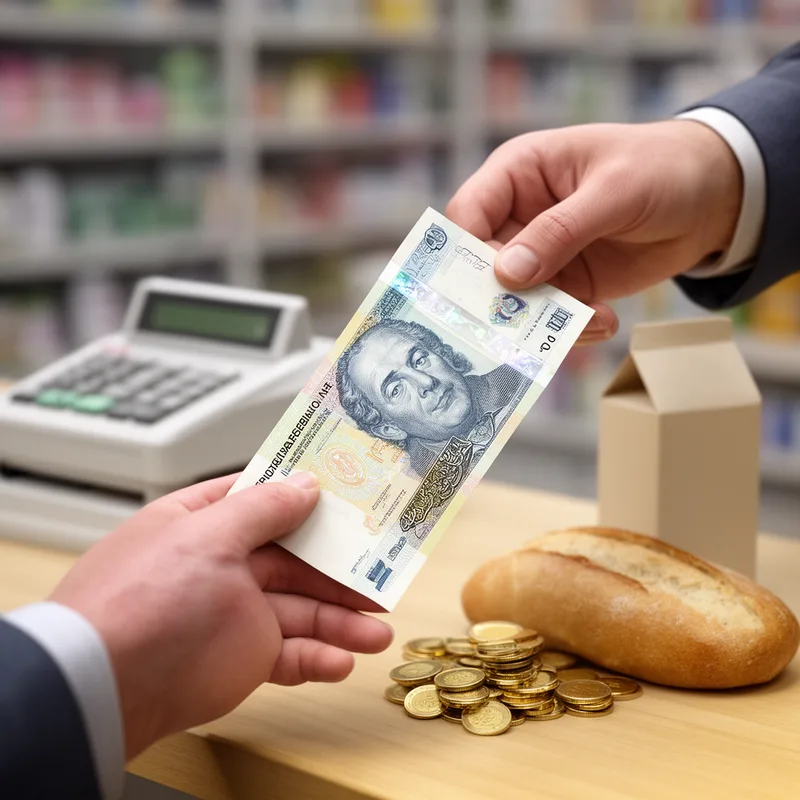
government note


 1
3.7
- noun
- /ˈɡʌvərnmənt noʊt/
- After the currency reform, the old banknotes were replaced with new government notes issued by the central bank.
Examples
-
Most day-to-day transactions are carried out with government notes and coins.
-
She collected rare government notes from different countries as a hobby.
-
The old shopkeeper refused to accept a torn government note.
-
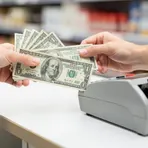
I paid for my coffee with a government note.
-
The shop only accepts government notes.
-
The store only accepts U.S. government notes as payment for transactions.
-
Many investors prefer to keep their savings in secure U.S. government notes rather than riskier assets.
Synonyms
 365
1.2
The money used in a country, like coins and paper notes
 288
1.5
Money made of paper that people use to pay for things
 104
1.5
A paper bill used as money or a written promise to pay money
 18
5.2
A paper U.S. dollar bill used as money
 18
1.6
Money made of printed paper notes that a government uses
 7
3.0
A paper form of money that people use to pay for things
 6
1.7
Paper money issued by a central bank used to pay for things
 4
2.5
Money in printed notes that people use instead of coins
 3
5.1
Paper money the United States Federal Reserve issues for buying things
 1
3.2
A piece of paper money issued by a central bank used to pay for things
 1
7.3
Paper money that is worth less than one unit of a country's money and is used like coins

A piece of paper used as money and issued by a central bank
Surface Forms
Morphology
The meaning 'a banknote issued by the government' is directly derivable from combining 'government' (the state authority) with 'note' (a paper currency). This is a straightforward attributive noun construction common across languages, so a B1 learner who knows both constituents and the currency sense of 'note' will readily understand the MWE.
Etymology
Government note comes from when the government printed a small note, a piece of paper, and promised it could be used as 'money' instead of coins. That's why government note means 'official paper money' you can use for buying things.