

to get out of someone's hair


 1
6.3
1
6.3
- phrasal verb
- Informal
 :
dejar en paz
:
dejar en paz
- If you could just get out of their hair, they might be able to finish the project.
Examples
-
- Hey, get out of my hair!
-
She thought we'd better get out of her hair.
-
"Get out of my hair, you little vampires.
-
Get out of his hair.
-
Shawn's agreed if he's wrong... -...he'll get out of my hair.
-
I need some peace and quiet, so please just get out of my hair for a while.
-
She wanted him to get out of her hair so she could concentrate on her work.
Synonyms
 ∞
2.3
∞
2.3
To avoid touching and disturbing a person, animal or object
 356
2.8
356
2.8
Move away from someone, or stop taking part in something
 321
8.1
321
8.1
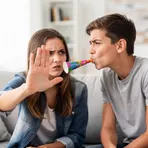
Tell someone to stop doing something annoying
 56
3.8
56
3.8
To avoid getting involved in an argument or fight
 42
3.6
42
3.6
Not to touch or interfere with something that belongs to someone else
 35
5.8
35
5.8
Tell someone not to ask about or get involved in other people's lives
 25
8.9
25
8.9
To stop getting involved in other people's business
 10
4.9
10
4.9
Leave a person because they are angry with you

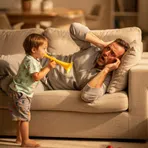
To leave someone alone when you bother them

To not ask about or get involved in someone's private matters
Antonyms

How Forceful
- UK

- Informal
- Informal
321
8.1
- Informal
356
2.8
- Informal
1
6.3
Surface Forms
Morphology
get + out + of + someone's + hair
The verb phrase 'get out of' clearly conveys leaving or removing oneself, but 'someone's hair' is used figuratively to mean being in someone's way or bothering them. Because the locution relies on a metaphorical extension of 'hair' and is not fully compositional or universally predictable across languages, a B1 learner who knows the words may partially infer the sense but would not reliably derive it without prior exposure.
Etymology
The phrasal verb get out of someone's hair comes from the image of a person standing so close and in the way that they are nearly in another person's hair, so to get out is to move away. That's why it now means 'stop bothering someone' or 'leave them alone'.