

geological period
 1
6.0
1
6.0

- noun
- /ˌdʒiəˈlɒdʒɪkəl ˈpɪərɪəd/
- Specialized
- The mass extinction at the end of the Permian geological period was the worst such event Earth has ever endured.
Examples
-
How fleeting are the wishes and efforts of man! How short his time! And consequently, how poor will his products be compared with those accumulated by nature during whole geological periods.
Academic text (1993) -
The answer lies in paleontology, the study of past geological periods through fossil remains.
Academic text (1994) -
The clay, 65 million years old and scattered around the globe, marks the boundary between two geological periods: the dinosaur age and the reign of the mammals.
Academic text (1992) -
These rocks are from an earlier geological period than the surrounding territory.
-
The answer lies in paleontology, the study of past geological periods through fossil remains.
Synonyms
 ∞
2.1
∞
2.1
A length of time with a clear start and end, like a class or game segment
 93
2.2
93
2.2
A length of time that includes certain events
 1
7.1
1
7.1
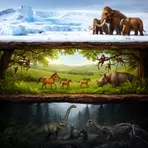
A time 252 to 201 million years ago when early dinosaurs first appeared
 1
8.9
1
8.9
An old name for the geologic time about 63 million to 2 million years ago between the Cretaceous and Quaternary


 1
8.4
1
8.4
A time about 345 to 280 million years ago when large swamp forests formed coal

A time about 299 to 251 million years ago when many new reptiles appear and a mass extinction happens
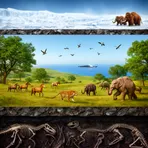
A time about 63 million to 2 million years ago after the Cretaceous and before the Quaternary
How Long

Surface Forms
Morphology
The meaning 'a division of geological time' is directly derivable from 'geological' (relating to Earth's physical structure and processes) modifying 'period' (a measured interval with boundaries), so the compound simply specifies a type of period. This modifier+noun compositional pattern is common across languages, so a B1 learner who knows both constituents will very likely infer the intended meaning.
Etymology
The term geological period comes from the idea of Earth's history as a long book of rock layers. Each geological period is like a chapter when certain rocks and fossils form, so the phrase now means a 'part of Earth's time' when those rocks and living things appeared.