

Triassic period
 1
7.1
1
7.1

- noun
- /traɪˈæsɪk ˈpɪərɪəd/
- Specialized
- During the Triassic period, approximately 250 million years ago, significant volcanic activity reshaped the planet's surface.
- Permian-Triassic period
- Triassic period, roughly 230 million
Examples
-
The fossils of various species, including dinosaurs and marine reptiles, were uncovered from the Triassic period, providing insight into early life on Earth.
-
From the early Triassic period onwards, Ichthyosaurs are the kings of the seas.
-
However, Keeley said, Isoëtes, the largest group of aquatic CAM plants, dates back to the Triassic period of 200 million years ago.
Academic text (1998) -
The earliest known sauropod appeared about 215 million years ago, during the Late Triassic period, and the last of the kind lived until the end of the Cretaceous period, 65 million years ago, when a worldwide cataclysm wiped out all dinosaurs except the birds.
Academic text (2007) -
Scientists continue to study the climate conditions of the Triassic period to understand the environmental changes that supported the emergence of dinosaurs.
Synonyms
 1
9.3
1
9.3
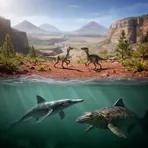
A period about 250 million years ago when early dinosaurs and sea reptiles appeared
Surface Forms
Morphology
The phrase is fully compositional: 'Triassic' names a specific geological interval and 'period' denotes a measured span of time, so together they denote that geological time span. This is a transparent, cross-linguistically common naming pattern, so a B1 learner who knows both constituents would understand the meaning.
Etymology
Triassic period comes from the prefix tri- meaning 'three'. In parts of Europe, rocks from that time form three clear layers, so early scientists named the time after those three layers, and the name now helps us remember the era when early dinosaurs and other life appeared.