
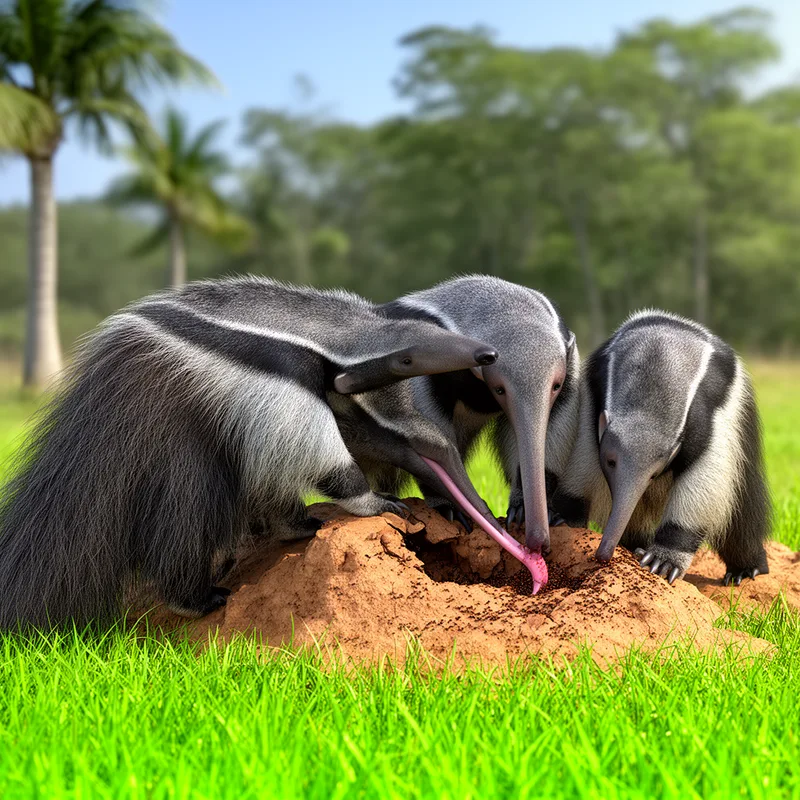
genus Myrmecophaga
- noun
- /ˈdʒɛnəs ˌmɪrˌmɛkəˈfɑːɡə/
- Specialized
- The genus Myrmecophaga includes the well-known giant anteater found throughout Central and South America.
Examples
-
The genus Myrmecophaga is known for its unique adaptations to a diet consisting mainly of ants and termites.
-
The distribution of animals belonging to the genus Myrmecophaga is limited mostly to tropical forests and grasslands.
-
Scientific studies of the genus Myrmecophaga have provided important insight into the evolution of ant-eating mammals.
-
The genus Myrmecophaga includes the giant anteater.
-
Did you know that the genus Myrmecophaga is found in South America?
-
Researchers recently discovered that the genus Myrmecophaga plays a crucial role in controlling insect populations.
-
The giant anteater, a fascinating mammal from the genus Myrmecophaga, can consume up to 30,000 ants in a single day.
Synonyms
A large anteater from Central and South America with a long tongue that eats ants and small insects
Surface Forms
Morphology
The phrase is fully compositional: 'genus' (a biological rank) combined with the taxonomic name 'Myrmecophaga' yields 'the genus called Myrmecophaga' or the group of species with that name. This follows standard, cross-linguistic scientific naming conventions rather than an idiomatic meaning, so a B1 learner who knows both constituents will understand it.
Etymology
Genus Myrmecophaga comes from ancient Greek parts: myrmec- meaning 'ant' and -phaga meaning 'to eat'. It was given to this group because these large animals eat ants, so the name literally means 'ant-eater' and fits them.

