
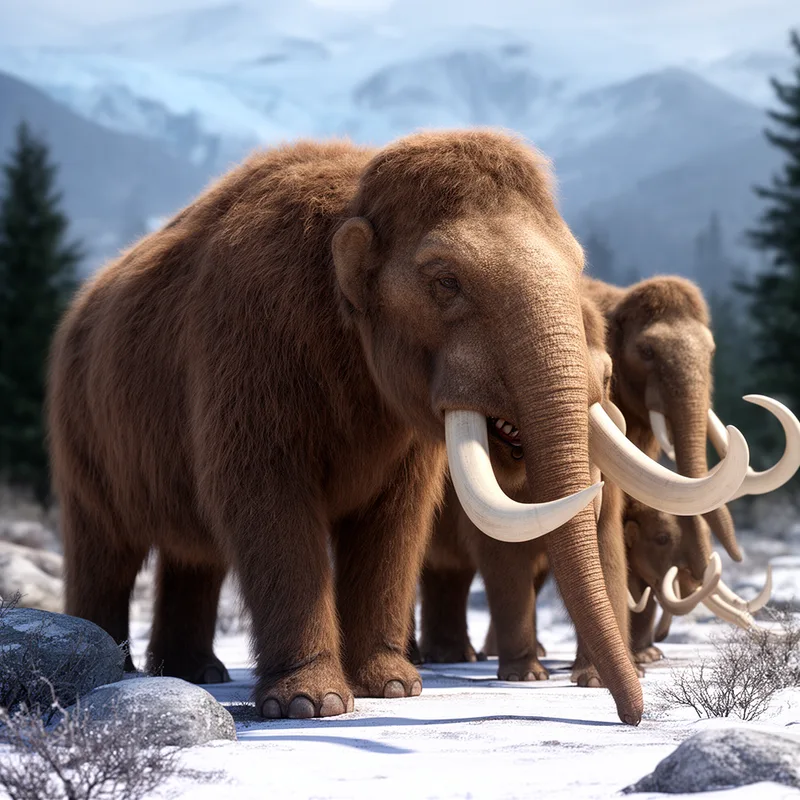
genus Mammut
- noun
- /ˈdʒiːnəs ˈmæmʌt/
- Specialized
- Unlike modern elephants, members of the genus Mammut had distinctive cone-shaped cusps on their molar teeth.
Examples
-
The remains of genus Mammut have been found across North America.
-
Scientists believe that genus Mammut went extinct at the end of the Pleistocene epoch.
-
The genus Mammut includes several extinct species.
-
Did you know that the genus Mammut is related to modern elephants?
-
Scientists believe that genus Mammut went extinct at the end of the Pleistocene epoch.
-
The remains of genus Mammut have been found across North America.
-
Unlike modern elephants, members of the genus Mammut had distinctive cone-shaped cusps on their molar teeth.
Synonyms


 1
9.9
A very large animal like an elephant that lived long ago and is now extinct
Surface Forms
Morphology
The meaning is directly compositional: 'genus' denotes a biological rank and 'Mammut' names a group of large extinct mammals, so a learner who knows both words can infer this is the taxonomic group called Mammut. Taxonomic constructions like 'genus X' are standard and cross-linguistically common, making the phrase transparent to B1 learners.
Etymology
Genus Mammut gets its name from a word early people used for very large, elephant-like animals they found in the ground. One popular story says explorers heard a local word like 'mamut' for the big buried bones, so scientists later used Mammut as the name for the group of extinct animals we call 'mastodons' today.