

genus Lycopersicon
- noun
- /ˈdʒɛnəs laɪˈkoʊpərsɪkən/
- Archaic
- The species once classified under genus Lycopersicon are now typically placed in Solanum.
Examples
-
Gardeners sometimes encounter the name genus Lycopersicon on old seed packets or plant labels.
-
Many botanical texts still reference genus Lycopersicon in discussions of tomato cultivation.
-
The genus Lycopersicon includes various species of tomatoes.
-
Did you know that the genus Lycopersicon was reclassified?
-
Many botanical texts still reference the genus Lycopersicon in discussions of tomato cultivation.
-
Gardeners sometimes encounter the name genus Lycopersicon on old seed packets or plant labels.
-
The species once classified under genus Lycopersicon are now typically placed in Solanum.
Synonyms



 1
8.0
1
8.0
A group of plants that includes potato and tomato

An old scientific name for tomatoes and similar plants now called Solanum
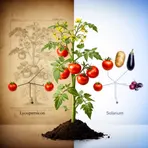
A former scientific name for tomato plants now in Solanum

A group of flowering plants that includes the tomato and some wild relatives
Surface Forms
Morphology
This phrase is fully compositional: 'genus' names a biological rank and 'Lycopersicon' is the specific taxonomic name, so the phrase simply denotes the genus called Lycopersicon. The structure is literal and follows common scientific naming patterns found across languages, not an idiom or metaphor, so a learner who knows both constituents will understand it.
Etymology
Genus Lycopersicon may come from Greek parts: lyco meaning 'wolf' and persicon meaning 'peach', so early writers pictured the tomato as a 'wolf peach'. That's why the name was used for the group of tomatoes, even though today these plants are usually called part of the genus Solanum.