

genus Lycopersicum
- noun
- /ˈdʒɛnəs laɪˈkoʊpərsɪkəm/
- Specialized
- The genus Lycopersicum includes both cultivated tomatoes and their wild relatives.
Examples
-
The genus Lycopersicum contains several species, including the common tomato.
-
The genus Lycopersicum includes many varieties of tomatoes.
-
Botanists have reclassified many species once placed in genus Lycopersicum into Solanum.
-
The characteristics of genus Lycopersicum are widely studied in plant genetics.
-
Did you know that genus Lycopersicum is part of the nightshade family?
-
Research on the genus Lycopersicum helps scientists understand plant evolution.
-
Agricultural studies focus on the traits of the genus Lycopersicum to improve tomato yields.
Synonyms



 1
8.0
1
8.0
A group of plants that includes potato and tomato

An old scientific name for tomatoes and similar plants now called Solanum

A group of plants that once included the tomato but is now placed in Solanum
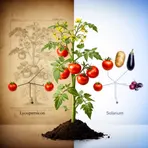
A former scientific name for tomato plants now in Solanum

A group of plants that includes potato and eggplant in the nightshade family
Surface Forms
Morphology
The phrase is fully compositional: 'genus' (a biological rank) combined with the proper name 'Lycopersicum' yields the literal meaning 'the genus called Lycopersicum.' This structure (rank + taxon name) is predictable and cross-linguistically common, so a B1 learner who knows both constituent words can understand the MWE.
Etymology
Genus Lycopersicum comes from old Latin and Greek words meaning 'wolf' and 'peach'. One popular story says early Europeans called the tomato a 'wolf-peach' because it looked like a small peach and people thought it might be dangerous, and that strong image later became the scientific name for tomatoes and their wild relatives.