
genus Larix
- noun
- /ˈdʒɛnəs ˈlærɪks/
- Specialized
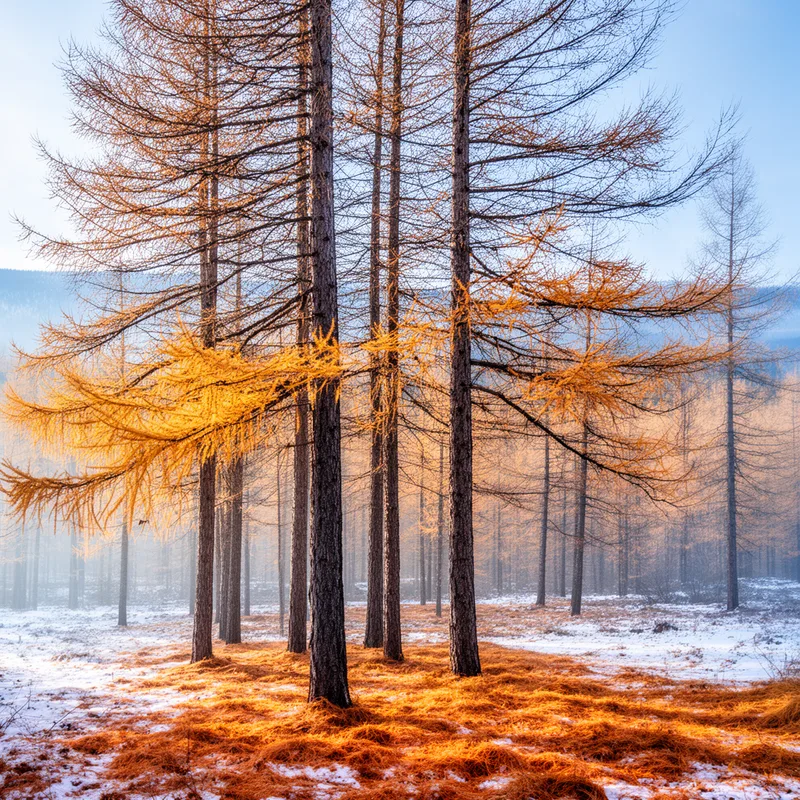
- The genus Larix is unusual among conifers because its trees are deciduous.
Examples
-
Forests dominated by the genus Larix are common in Siberia and parts of Canada.
-
Many species in the genus Larix are valued for their strong, flexible wood.
-
The genus Larix includes several species of larch trees.
-
Many gardeners appreciate the beauty of the genus Larix.
-
Forests dominated by the genus Larix are common in Siberia and parts of Canada.
-
Many species in the genus Larix are valued for their strong, flexible wood.
-
The genus Larix is unusual among conifers because its trees are deciduous.
Synonyms

A tree with thin leaves like needles that turn yellow and fall in autumn
Surface Forms
Morphology
The meaning 'a genus of larch trees' is directly and compositionally derived from 'genus' (a biological rank grouping related species) combined with 'Larix' (the name for larches). Although somewhat technical, this naming pattern (genus + taxon name) is standard and cross-linguistically transparent, so a B1 learner who knows both constituents will understand the phrase.
Etymology
Genus Larix comes from an old Latin word for the larch tree, Larix. People long ago noticed these trees drop their needles in autumn instead of staying green all year, so the name came to mean 'a group of larch trees'.

