
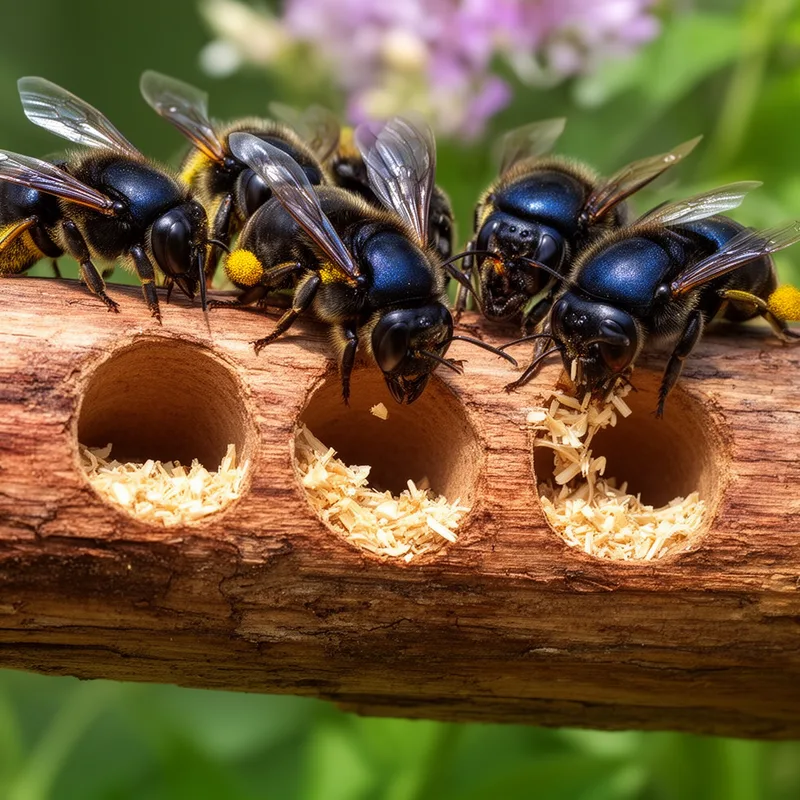
genus Xylocopa
- noun
- /ˈdʒɛnəs zɪˈloʊkoʊpə/
- Specialized
- The genus Xylocopa includes many species of carpenter bees.
Examples
-
The genus Xylocopa includes species commonly known as carpenter bees.
-
Members of the genus Xylocopa are important pollinators in many ecosystems.
-
Scientists studied the nesting behavior of the genus Xylocopa in tropical forests.
-
Did you know that the genus Xylocopa is known for nesting in wood?
-
The genus Xylocopa consists of large bees that nest in wooden structures, making them unique among pollinators.
-
Researchers have discovered that the genus Xylocopa plays a crucial role in pollinating various flowering plants.
-
The genus Xylocopa is often found in gardens, where these carpenter bees are recognized for their distinctive nesting habits.
Synonyms

A large solitary bee that bores into wood to make a nest
Surface Forms
Morphology
The phrase is fully compositional: 'genus' (a biological rank) combined with the proper name 'Xylocopa' yields 'the taxonomic genus called Xylocopa,' which directly denotes a group of carpenter bees. Latin/Scientific genus names are used similarly across languages, so a B1 learner who knows both constituents can infer the meaning.
Etymology
Genus Xylocopa comes from Greek roots meaning wood and cut, so it literally means 'wood-cutter' and gives a clear image: these 'carpenter bees' bore into wood to make their nests.

