
Xylocopa
- proper noun
- /ˌzaɪləˈkoʊpə/
- Specialized
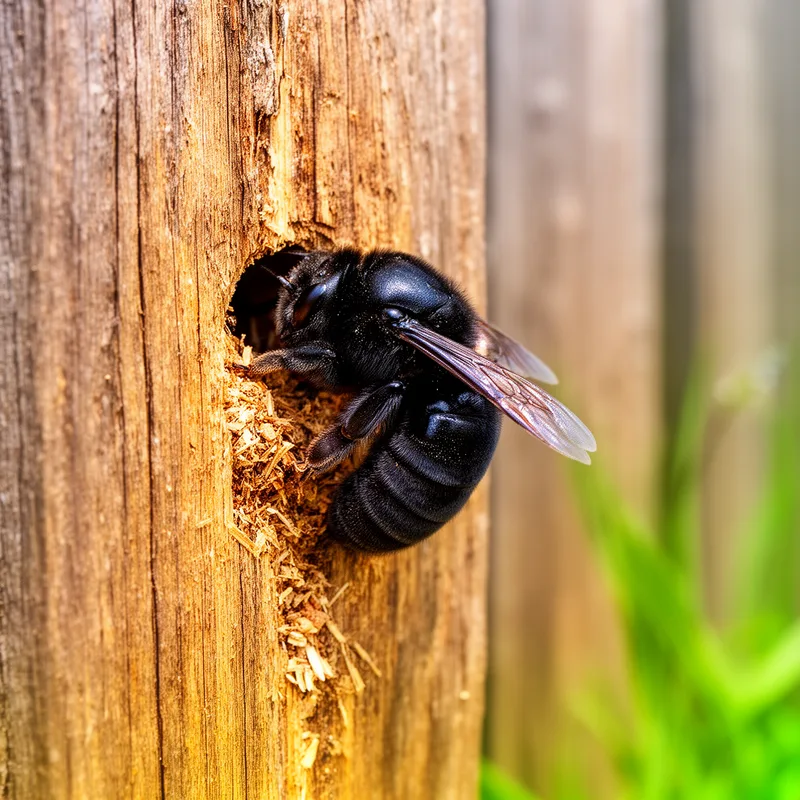
- Unlike honeybees, Xylocopa build their nests by tunneling into dead trees.
- carpenter bee
Examples
-
Did you see a Xylocopa buzzing around the garden?
-
The Xylocopa is often mistaken for bumblebees.
-
The Xylocopa can often be seen hovering near wooden fences in the summer.
-
Scientists studied the nesting habits of Xylocopa in different types of wood.
-
The Xylocopa genus includes various species of carpenter bees that are known for their ability to bore holes in wood.
-
In gardens and forests, many people appreciate the presence of Xylocopa for their role in pollination.
-
The large, shiny bodies of Xylocopa make them easily identifiable among other bee species.
Synonyms


 1
6.4
1
6.4
A large bee that lives alone and makes nests by drilling holes in wood

A group of large carpenter bees that bore into wood to make nests
Compounds
Surface Forms
Etymology
Xylocopa comes from Greek parts xylo- 'wood' (seen in xylophone) and -copa 'to cut', so it literally means 'wood-cutter'. That's why Xylocopa are called carpenter bees: they make holes in wood to build their nests.