
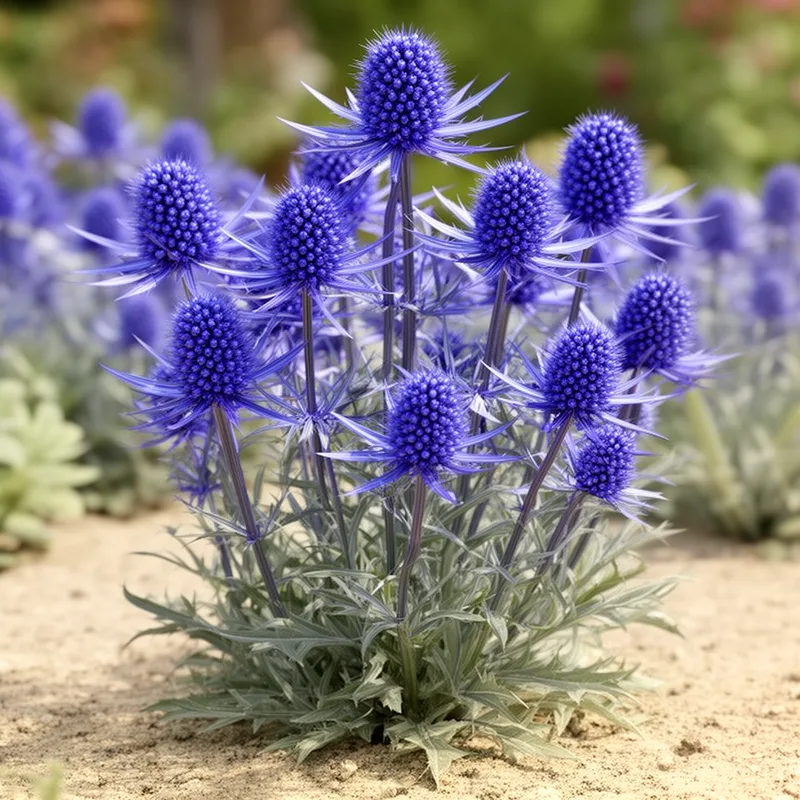
genus Eryngium
- noun
- Specialized
 :
género Eryngium
:
género Eryngium
- Species in the genus Eryngium are commonly called sea hollies and are popular in floral arrangements.
Examples
-
The genus Eryngium is known for its ability to thrive in dry, sandy soils.
-
Many gardeners choose genus Eryngium for its striking blue flower heads and distinctive look.
-
The genus Eryngium includes many species of sea hollies.
-
Many gardeners love the genus Eryngium for its unique appearance.
-
Many gardeners choose genus Eryngium for its striking blue flower heads and distinctive look.
-
Species in the genus Eryngium are commonly called sea hollies and are popular in floral arrangements.
-
The genus Eryngium is known for its ability to thrive in dry, sandy soils.
Synonyms

A spiky plant with thistle-like flowers often used in gardens and flower arrangements
Surface Forms
Morphology
The phrase is fully compositional: 'genus' denotes a biological rank grouping related species and 'Eryngium' names a particular group of flowering plants, so together they denote the taxonomic group of those plants. This follows standard, cross-linguistic taxonomic naming conventions, so a B1 learner who knows both constituents would understand the meaning even if the term is somewhat technical.
Etymology
Genus Eryngium comes from an old Greek word for a sharp, spiky plant that often grew by the sea and was called 'sea holly'. So today genus Eryngium names the group of thistle-like plants people still call sea hollies.

