
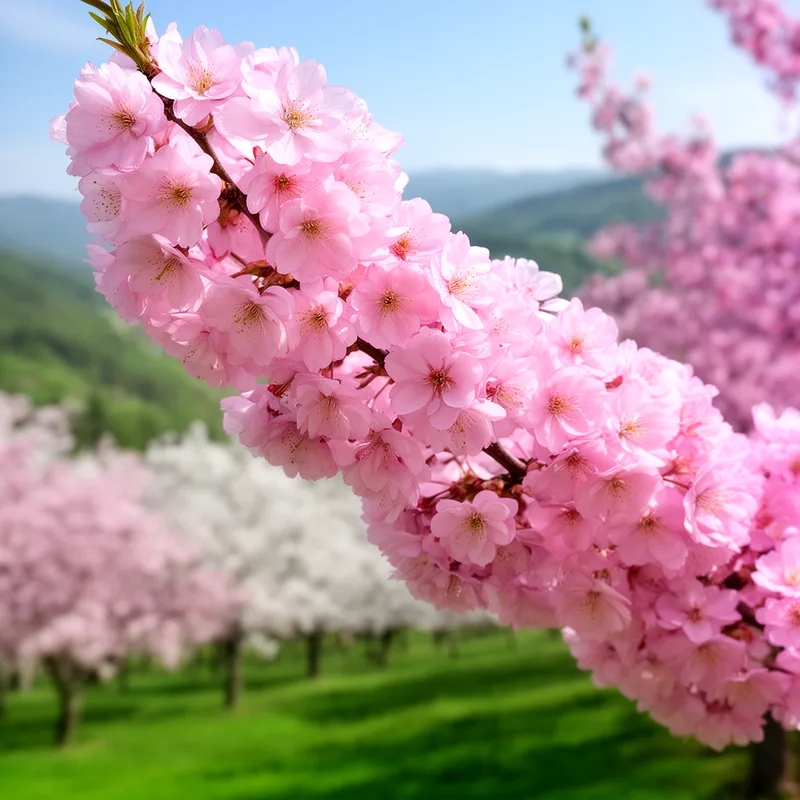
full bloom
 6
3.0
6
3.0

- noun
- The cherry blossoms were in full bloom and it was so beautiful.
Examples
-
It's when the orchids are in full bloom.
-
I've brought Gary a large bunch of peonies in full bloom.
Fiction book (1999) -
A woman is in full bloom only for a short while!
-
In April, the rains returned, and May was in full bloom.
Fiction book (1994) -
Then something catches his eye: four yellow roses in full bloom.
Fiction book (2000) -
Our summer romances are in full bloom, and everybody's in love!
-
Tulips and daffodils were in full bloom along the streets and highways.
Fiction book (1998) -
Aunt May's pea patch was in full bloom again; in fact, the entire garden was growing profusely.
Fiction book (1993) -
The gladioli are in full bloom—yellows, oranges, and pinks translucent and vivid in the evening sun.
Fiction book (2001) -
The cherry blossoms were in full bloom and attracted many visitors to the park.
Synonyms
 52
1.0
52
1.0
A flower on a plant or the time when a plant makes flowers
 4
2.5
4
2.5
A time when flowers open and plants become full of blooms

 1
8.4
1
8.4
Time when many flowers bloom on a plant or in a garden
The time when a plant's flowers form and open
The time when flowers open and bloom
Antonyms

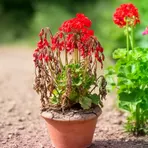
How Bloomed

Surface Forms
Morphology
The meaning 'the state of peak flowering' is directly and transparently derived from combining 'full' (complete/highest degree) with 'bloom' (flowering or a flower). This adjective + noun composition is cross-linguistically common (e.g. Spanish 'en plena floración') and follows regular semantic combination, so a B1 learner who knows the constituents would readily infer the MWE meaning.
Etymology
Full bloom comes from the picture of a flower with all its petals open; the bloom is full when the plant looks most beautiful and complete. So we use full bloom to say something is 'at its best' or fully grown and developed.