
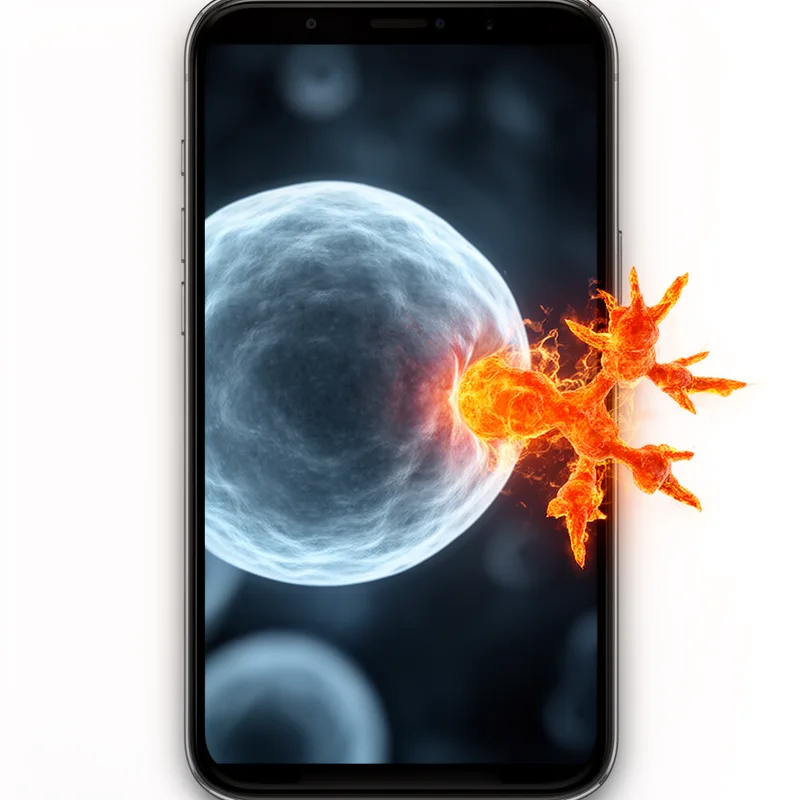
free radical
 8
5.1
8
5.1

- noun
- /fri ˈrædɪkəl/
- Specialized
- We also measured free radical production in the retina to determine the oxidative stress level.
- oxygen free radicals
- free radical formation
- free radical injury
Loading YouTube…
Watch on YouTubeSo hydrogen is one of the great antioxidants, stabilizers of free radicals in nature.
- So hydrogen is one of the great antioxidants, stabilizers of free radicals in nature.
- Also, the levels of free radicals in your blood go up when you drink a big glass of of fruit juice.
- It creates a state of imbalance inside your cells where free radicals and high energy particles start flying around.
- So with the tumor tissue is putting out proportionally far more oxygen free radicals in response to the oxygen that I'm giving it.
- You know, it's reactive oxygen species, free radicals, all these ideas, none of them has led to a successful treatment.
Examples
-
Meanwhile, smoking increases LDL buildup, perhaps by unleashing unstable free radical molecules that damage lipids and vessel walls.
-
So that's why things like antioxidants help to scavenge those free radicals and eliminate them so that they don't induce that DNA damage.
-
During normal body processes, free radicals are produced that have the potential to cause cancer and cell damage.
Academic text (2012) -
And free radicals in biology are both good and bad.
-
In large doses, iron directly damages cells by creating free radicals that cause injury to the cell.
Academic text (2007) -
Vitamin C and vitamin E can handle one free radical at a time and neutralize it.
Blog text (6) -
Normal byproducts of metabolism, called oxygen free radicals, also cause damage.
Academic text (2003) -
The vitamin and chemical scavengers would deal with the free radicals before they could cause any irreversible damage.
Fiction book (1992) -
Your liver converts ethanol to aldehydes, which produce free radicals that damage proteins in your liver.
Blog text (18) -
During normal body processes, free radicals are produced that have the potential to cause cancer and cell damage.
Synonyms
 9
8.1
9
8.1
A group of atoms that reacts quickly with other molecules

A small chemical part made of one oxygen and one hydrogen atom that reacts quickly
A group of two oxygen atoms in a molecule that reacts easily and can damage cells

A very active group of one carbon and three hydrogen atoms with formula CH3, formed when methane loses one hydrogen

A small chemical group formed when toluene loses one hydrogen atom from its methyl part
Surface Forms
Morphology
The noun is a straightforward adjective + noun composition: 'free' (not bound) modifies 'radical' (a reactive chemical species), so the phrase literally denotes a radical that is not bound. Although the term is technical, its meaning follows normal compositional logic and would be predictable to a learner who knows both constituent senses.
Etymology
The term free radical comes from a simple chemistry image: a radical is a small group of atoms and when it is free it has a lonely, moving electron. That lonely electron makes it grab or change other molecules, so free radicals are quick to react and can 'harm' cells, which is why the name is used for these tiny, damaging particles.