
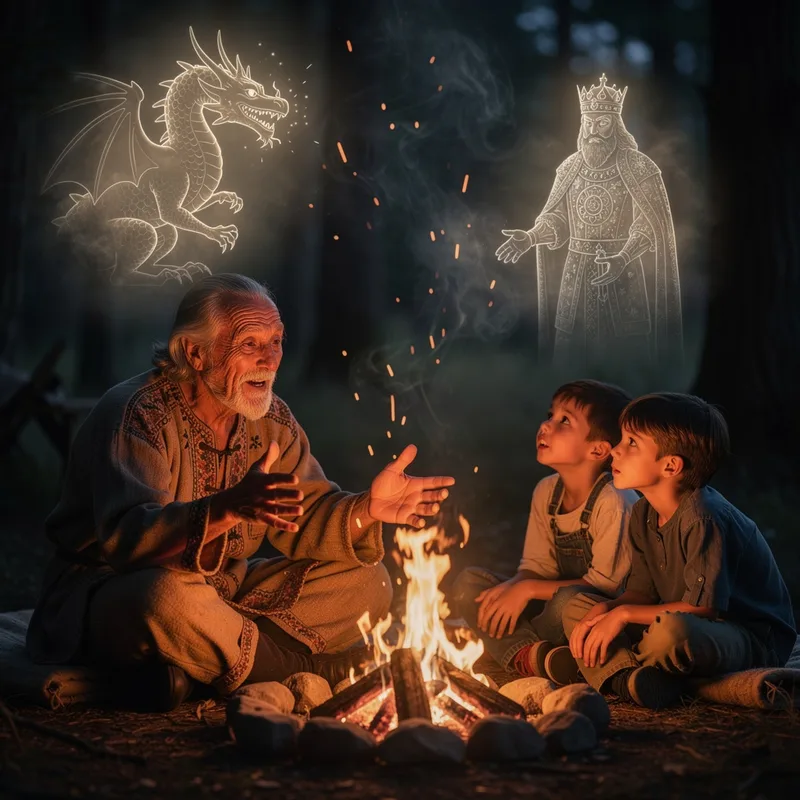
folklore
 38
4.9

- noun
- /ˈfoʊkˌlɔr/
- In many cultures, folklore includes legends about mythical creatures that have been passed down through generations.
- culture and folklore
- tradition and folklore
- myth and folklore
Loading YouTube…
Watch on YouTubeI heard this, this is AI think this is a Jewish folklore story.
- I heard this, this is AI think this is a Jewish folklore story.
- I totally agree because we used to, I used to like hear folklore of how Jerry Rice chain trained.
- Another great body of lore that preserves this very adequately is the very folklore of the Celts.
- We have got Moneyball in sports, the use of statistics and hypothesis testing instead of folklore.
- And so a whole bunch of folklore grew up over the about the roles of these chemicals.
- Song and dance is a very intrinsic part of folklore and the way we have been brought up to tell our stories.
- There was a lot of, you know, Covington has a lot of history and folklore and, you know, and a lot of good people, man.
- Unfortunately, there is a folklore around UFOs and this has been a huge disservice to the scientific community.
- The law of names goes back to folklore hundreds of years ago.
- So, you know, I'm not saying it was a well known argument and the argument of people hearing that I put the gun in the mouth kind of like made it folklore.
Examples
-
The assignment for The Forms of Folklore required students to collect approximately 50 items of folklore.
Academic text (2017) -
With the late date of the approval of the MA program in folklore, only six students enrolled.
Academic text (2017) -
Even those who are not particularly interested in folklore are going along with it.
Academic text (2017) -
What I am interested in is teaching folklore and doing research in folklore.
Academic text (2017) -
See, these stories are modern, oral folklore.
-
There's actually an interesting bit of folklore that goes with it.
-
So in leap year, folklore says that women would propose to men during leap year.
-
We've known for a long time through folklore what kinds of things bring happiness.
-
Aaron Copland made extensive use of folklore in his ballet Billy the Kid.
Academic text (2011) -
In Finnish folklore there is a story of Lemon Keinen.
Synonyms
 964
2.0
A custom or belief passed down in families and groups over time
 230
4.0
Traditions, beliefs, and customs people pass down in a family or society
 103
5.5
A group of old stories from a culture about gods and heroes
 49
6.1
Knowledge and stories that people pass down over generations
 13
3.7
Traditions, objects, and customs people keep and pass on to future generations
 6
8.1
A set of old stories that explain a group's beliefs and how it began
 5
3.9
Traditional stories people tell to explain past events or cultural beliefs, often not true
 2
6.7
Traditional customs, arts, crafts, and everyday life of a community
 1
4.9
Old information a community passes from older to younger people about culture, nature, or skills
Compounds


 1
7.2
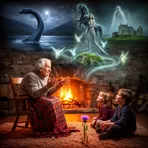
Stories and beliefs from Scotland about monsters and fairies that people pass down over generations

- Literature
1
4.5
Traditional Greek stories and ideas about gods, heroes, and monsters
How Traditional
1
6.4

- Literature
365
3.9
38
4.9
- Literature
8
3.4
∞
1.0
Surface Forms
Morphology
Etymology
The word folklore comes from two simple parts: folk meaning 'people' and lore meaning 'traditional knowledge or stories'. Think of it like the tales, customs and beliefs people 'hand down' by word of mouth, for example family stories told around a fire. So, folklore is the shared stories and beliefs of a community.